Silver Halide Heritage

The Art of Black & White Photography

Author: WFM

  • Remembering Kodak Verichrome Pan: Exploring Today’s Alternatives

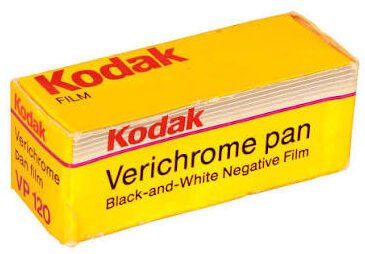
    Kodak Verichrome Pan holds a special place in my memories of traditional black-and-white photography. Although manufactured in several formats, including 120, 620, and sheet film, it was never offered in 35mm. I particularly enjoyed using Verichrome Pan in 120 roll-film format, where its smooth tonal transitions, pleasing greyscale, and generous exposure latitude made it one of my favourite films for portraiture and landscape photography.

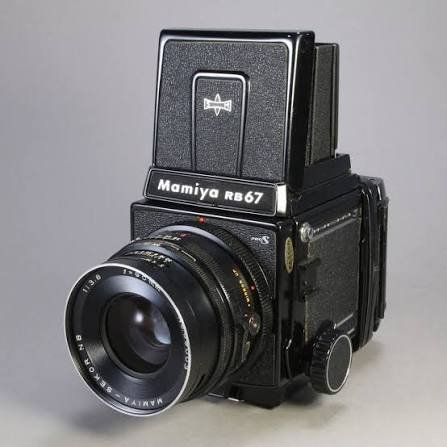
    When enlarged to 8×10 or 11×14 inches, Verichrome Pan produced prints with a tonal richness I particularly appreciated. Even larger enlargements were possible, especially when using my Mamiya RB67 Pro S medium-format camera, whose generous 6×7 cm negatives provided ample detail for substantial prints while preserving the smooth greyscale that made the film so appealing. Its traditional grain structure and forgiving exposure characteristics made it dependable across a variety of photographic situations. Even when exposure was less than ideal, I often found that the negatives remained quite usable.

    I also appreciated its versatility in development. My choice of developer depended upon the subject and the qualities I hoped to achieve. For portraiture, I frequently preferred PMK, a staining developer containing pyrogallol. In my experience, this combination produced exceptionally smooth tonal transitions and pleasing skin tones. For landscapes and more general photography, Kodak D-76 diluted 1:1 was often my choice, yielding fine grain, excellent apparent sharpness, and good tonal separation.

    Verichrome Pan was discontinued in 2002, leaving photographers who appreciated its distinctive characteristics searching for suitable alternatives. Although no currently manufactured film can reproduce its emulsion exactly, several available black-and-white films possess qualities that make them worthy of consideration.

    Two particularly interesting possibilities are Ilford FP4 Plus 125 and Bergger Pancro 400, both available in 120 roll-film format.

    Ilford FP4 Plus 125: A Natural Starting Point

    Among today’s traditional black-and-white films, Ilford FP4 Plus is one of the most logical starting points for photographers seeking qualities reminiscent of Verichrome Pan.

    Like Verichrome Pan, FP4 Plus has a nominal sensitivity of ISO 125. It is a conventional-grain panchromatic film known for fine grain, excellent sharpness, moderate contrast, and generous exposure latitude.

    These characteristics make it particularly suitable for portraiture, landscapes, architecture, and general photography where careful tonal rendition is important.

    For photographers who appreciated Verichrome Pan’s forgiving nature, FP4 Plus offers a similar practical advantage. Its exposure latitude provides considerable flexibility, while appropriate development can help control highlight density and overall negative contrast.

    FP4 Plus can be developed in a wide variety of conventional developers, including Ilford ID-11 and Kodak D-76. The choice of developer, dilution, agitation, and development time can influence the final negative, making it a versatile film for photographers who enjoy working toward a particular tonal interpretation.

    In 120 format, its fine grain and sharpness make it especially attractive for photographers intending to produce traditional enlargements.

    For someone who remembers Verichrome Pan and wishes to explore a contemporary film with comparable speed and a similarly versatile character, FP4 Plus is an excellent candidate. This recommendation is based on the film’s published characteristics rather than a claim that the two emulsions produce identical results.

    Related information and photographic examples:

    Ilford FP4 Plus: Manufacturer information and specifications

    Bergger Pancro 400: Traditional Tonality with Greater Speed

    Another particularly interesting possibility is Bergger Pancro 400, a black-and-white panchromatic film available in 120 format.

    Unlike Verichrome Pan and FP4 Plus, which are rated at ISO 125, Bergger Pancro has a nominal sensitivity of ISO 400. This provides approximately one and two-thirds stops of additional speed, a significant advantage when photographing in reduced light.

    For photographers working with available-light portraiture, interiors, overcast conditions, or other situations where illumination is limited, that additional sensitivity can be extremely useful.

    A faster film may permit a shutter speed sufficient to reduce camera movement or subject motion without requiring the photographer to open the lens aperture as far. This can be particularly valuable when using medium-format cameras handheld.

    What makes Bergger Pancro 400 especially interesting, however, is that its appeal extends beyond speed alone.

    The film employs a dual-emulsion design and is described by Bergger as offering extended greyscale, wide exposure latitude, and manageable contrast. Its grain and tonal characteristics depend, as with other films, upon exposure and development.

    These qualities make Pancro 400 worth investigating for photographers who appreciated Verichrome Pan’s smooth tonal transitions and flexibility in processing.

    Naturally, an ISO 400 film will not necessarily reproduce the grain characteristics of an ISO 125 emulsion. Nevertheless, the larger negative area of 120 film can help make grain less intrusive in moderate-sized enlargements.

    For someone seeking a traditional-looking black-and-white negative while needing greater flexibility in available light, Bergger Pancro 400 may prove an excellent alternative.

    Its tonal characteristics and response to different developers also make it an intriguing choice for photographers who enjoy experimenting with exposure and processing techniques.

    Related information and photographic examples:

    Bergger Pancro 400: Manufacturer and product information

    Bergger Pancro 400 Review: Beyond the Aperture

    The independent review provides examples of Pancro 400 in medium-format photography. As with any photographic comparison, differences in exposure, development, scanning, and printing should be considered when evaluating the results.

    Choosing Between FP4 Plus and Pancro 400

    For photographers seeking a contemporary alternative to Verichrome Pan, the choice between these two films depends largely upon the intended subject and working conditions.

    Ilford FP4 Plus 125 would be my first recommendation for photographers who wish to remain close to Verichrome Pan’s original speed and value fine grain, traditional tonal rendition, and flexibility in development. It is particularly well suited to landscapes, portraits under controlled lighting, and photography where shutter speed is less critical.

    Bergger Pancro 400 deserves particular consideration when additional film speed is needed. Its ISO 400 sensitivity makes it better suited to available-light portraiture, dim interiors, and other low-light situations where the slower FP4 Plus might require impractically long exposures. Its broad tonal range and traditional grain character make it an appealing choice beyond its speed advantage.

    Neither film should be regarded as an exact reproduction of Kodak Verichrome Pan. Each possesses its own emulsion characteristics, and the resulting negative will depend upon exposure, development, and the photographer’s working methods.

    Final Thoughts

    For those of us who remember Verichrome Pan, its disappearance represented more than the loss of another film from a manufacturer’s catalogue. It meant losing a familiar photographic material whose particular characteristics we had learned to understand and appreciate.

    Fortunately, traditional black-and-white photography still offers worthwhile alternatives.

    Ilford FP4 Plus provides a logical starting point for photographers seeking the fine grain, moderate speed, and generous exposure latitude associated with Verichrome Pan. Bergger Pancro 400 offers another compelling possibility, especially when greater sensitivity is needed without abandoning the tonal qualities that make conventional black-and-white film so appealing.

    Ultimately, the objective should not be to reproduce Verichrome Pan perfectly, but to discover which available film and developer combinations can provide the qualities we valued in it.

    That process of experimentation, observation, and refinement has always been one of the great pleasures of traditional photography.
  • Exploring Traditional Black-and-White Films Available Today

    Traditional black-and-white films each possess distinctive characteristics, from grain structure and contrast to tonal range and sensitivity to light. The choice of film, together with exposure and development techniques, plays an important role in determining the character of the finished photograph. Drawing upon decades of practical darkroom experience, we’ll explore the qualities of several films available today, helping photographers choose the emulsions best suited to their creative needs.

    Kodak Ektapan 100

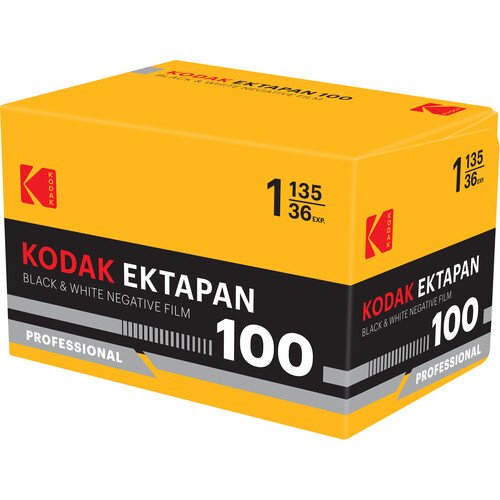
    Kodak Ektapan 100 is a black-and-white negative film using Kodak’s T-Grain emulsion technology. Kodak emphasizes its very fine grain, high sharpness, and ability to record fine detail for things like portraits, landscapes, architecture, and larger prints. It’s available in 35mm, 120, and 4×5 formats. Although I’ve used Kodak T-Max 100 extensively since the early 1990’s, I haven’t tested film sold under the Ektapan name yet, so the specs above come from Kodak’s published information rather than my own results.

    Click the link below to read photographer John Sexton’s article on T-Max films:

    “A Few Ideas on Using Kodak T-Max Films Successfully” (1987).

    Where to buy:

    B&H Photo

    Amazon

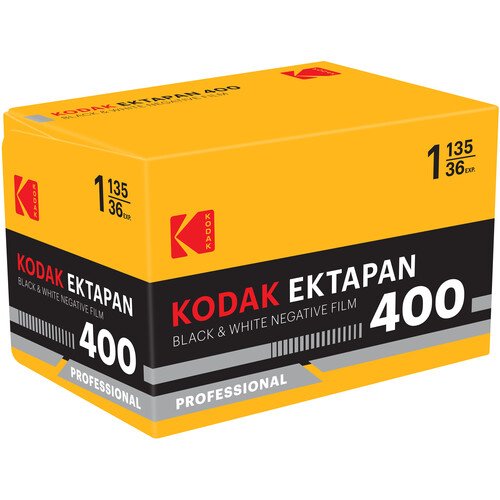
    Kodak Ektapan 400

    Kodak Ektapan 400 combines ISO 400 sensitivity with Kodak’s T-Grain emulsion technology for fine grain and high sharpness. Its two-stop speed advantage over Ektapan 100 allows faster shutter speeds or smaller apertures in the same light, making it useful for handheld photography, moving subjects, and lower-light situations. Available in 35mm, 120, and 4×5 formats, it balances fine detail with the flexibility of a faster film. For historical perspective, John Sexton described using T-Max 100 as his primary film and choosing T-Max 400 when he needed additional speed—a practical distinction worth considering when selecting between film speeds.

    Where to buy:

    B&H Photo

    Amazon

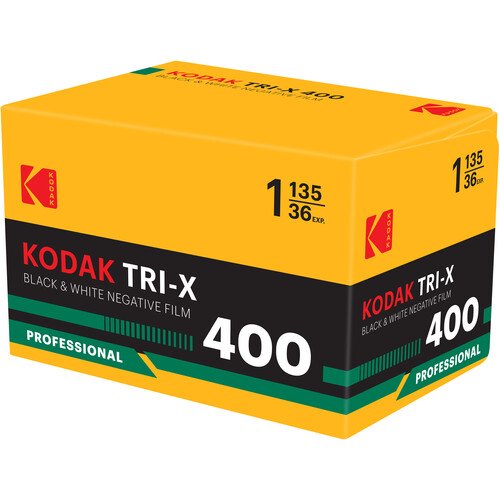
    Kodak Tri-X 400

    Kodak Tri-X 400 is a classic ISO 400 panchromatic black-and-white film, valued for its distinctive grain, sharpness, and generous exposure latitude. It remains a popular choice for portraiture, street photography, and documentary work.

    In my own photography, I frequently exposed Tri-X at an exposure index of 200, providing additional exposure and reducing development to achieve the tonal range I preferred. This approach helped preserve shadow detail while controlling highlights and overall contrast.

    Other accomplished photographers have developed their own approaches to Tri-X. John Sexton and Michael Kenna offer particularly interesting perspectives on how exposure, development, and printing techniques can shape the character of this remarkably versatile film.

    Further reading:

    https://www.johnsexton.com/newsletter11-2024.html

    https://www.michaelkenna.net/ivwork.php

    Where to buy:

    B&H Photo

    Amazon

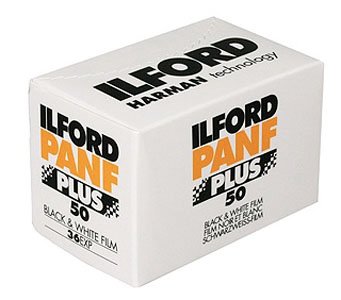
    Ilford Pan F Plus

    Ilford Pan F Plus is an ISO 50 black-and-white film that Ilford describes as a high-contrast offering with exceptionally fine grain, sharpness, and detail. In my own work, however, I used exposure and development adjustments with various fine-grain developers to moderate that contrast and achieve a longer tonal scale. I particularly valued the smooth skin tones it produced in portraiture, along with the fine detail and gentle tonal transitions I achieved in landscapes. Its exceptionally fine grain also allowed me to make substantial enlargements while retaining a smooth, detailed image. Although its slower speed requires sufficient light or tripod support, I found Pan F Plus rewarding for photographers willing to tailor exposure and development to the results they want.

    Further reading:

    https://www.ilfordphoto.com/ilford-panf-plus-montana-snow

    https://www.gregoryowain.co.uk/blog/film-review-ilford-pan-f-plus-35mm

    Where to buy:

    B&H Photo

    Amazon

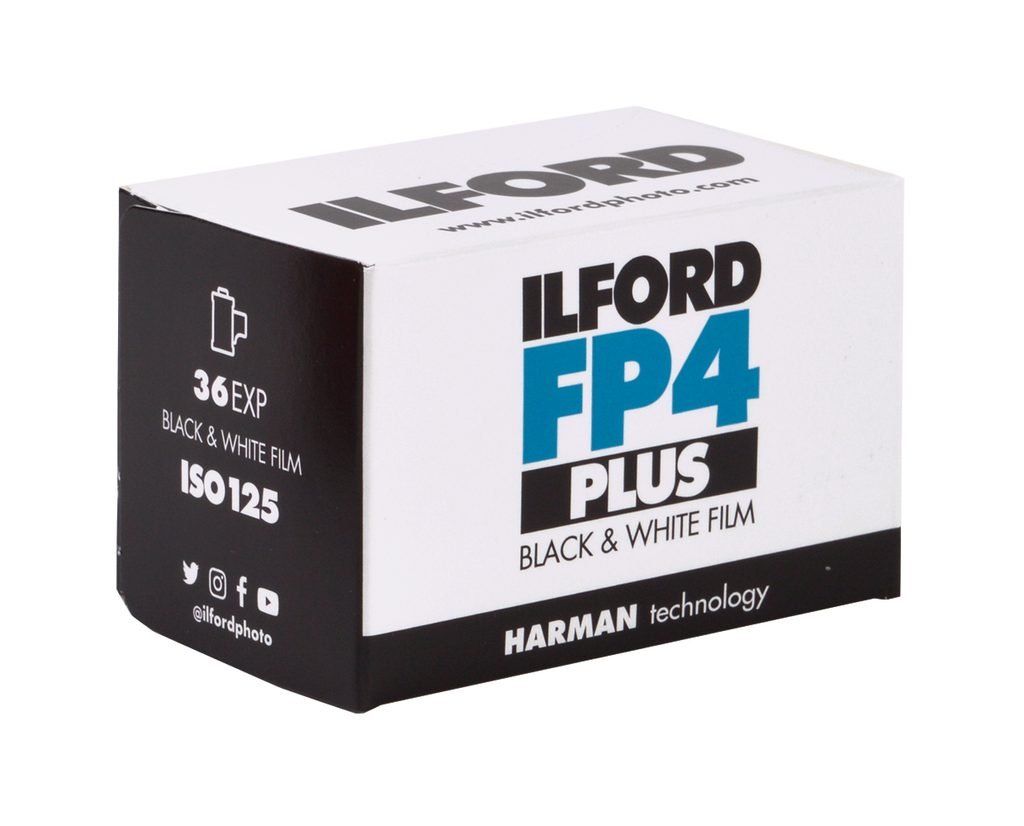
    Ilford FP4 Plus

    Ilford FP4 Plus is an ISO 125 all-purpose black-and-white film offering fine grain, excellent sharpness, and wide exposure latitude. I used it alongside Kodak Plus-X and turned to it for the kinds of photography I had previously undertaken with Verichrome Pan after that film was discontinued. To my eye, FP4 Plus had more in common with Plus-X in its overall character, but its speed and versatility made it a practical choice for work that Verichrome Pan had once served. I regard it as a dependable traditional film in this speed range, with room to tailor exposure and development to the subject and the intended print.

    Further reading:

    https://www.richardpickup.com/blog/2016/10/9/pebble-project-fp4

    Where to buy:

    B&H Photo

    Amazon multi-pack option

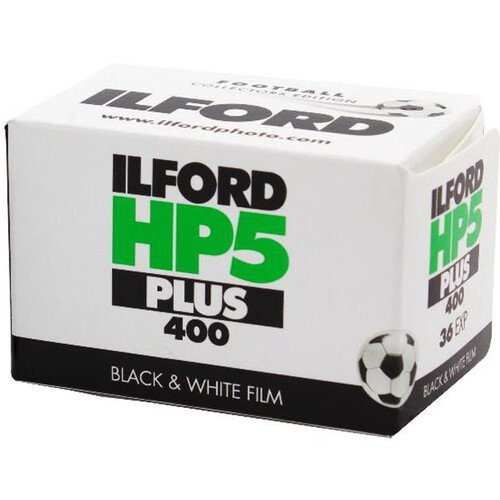
    Ilford HP5 Plus

    Ilford HP5 Plus is an ISO 400 panchromatic black-and-white film offering fine grain, excellent sharpness, medium contrast, and wide exposure latitude. Like Kodak Tri-X 400, it is a versatile traditional film suited to portraiture, street photography, documentary work, and available-light shooting. Both respond well to push processing when faster shutter speeds are needed, with changes in grain, contrast, and shadow detail. HP5 Plus offers considerable freedom to shape its tonal character through exposure, developer choice, and development time. Although photographers often describe HP5 Plus as gentler in contrast than Tri-X, neither film has a single fixed look: processing and printing strongly influence the result, making personal testing more useful than declaring one superior.

    Where to buy:

    B&H Photo offers single rolls and multi-packs

    Amazon offers multi-packs

    Further reading:

    https://bluemooncameracodex.com/film-fridays/ffilfordhp5

    For a photographic comparison of Ilford HP5 Plus and Kodak Tri-X 400, visit Hai Hoang Tran’s illustrated article, which explores the visual characteristics of these two classic black-and-white films.

    https://www.haihoangtran.com/blog/2018/10/15/ilford-hp5-pus-vs-kodak-tri-x-400

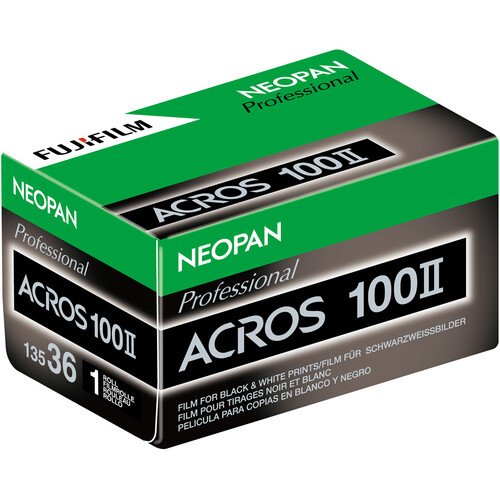
    Fujifilm Neopan 100 Acros II

    Fujifilm Neopan 100 Acros II is an ISO 100 black-and-white film known for its exceptionally fine grain, high sharpness, and excellent tonal reproduction.

    I worked with the original Neopan Acros 100 approximately thirty years ago and found it comparable in many respects to Kodak T-Max and Ilford Delta films. However, I found its contrast somewhat higher than I preferred. Developing it in Kodak D-76 diluted 1:1 helped me achieve more balanced negatives with pleasing midtones.

    Although I have not yet tested Acros II, Fujifilm describes the newer emulsion as offering improved tonal gradation, particularly in the highlights. My observations concerning exposure and development are based on the original Acros rather than its successor.

    Further Reading:

    EMULSIVE offers an illustrated comparison of the original Neopan Acros 100 and Acros II, examining differences in contrast, shadow detail, and tonal reproduction.

    Where to buy:

    Fujifilm Neopan Acros II 100

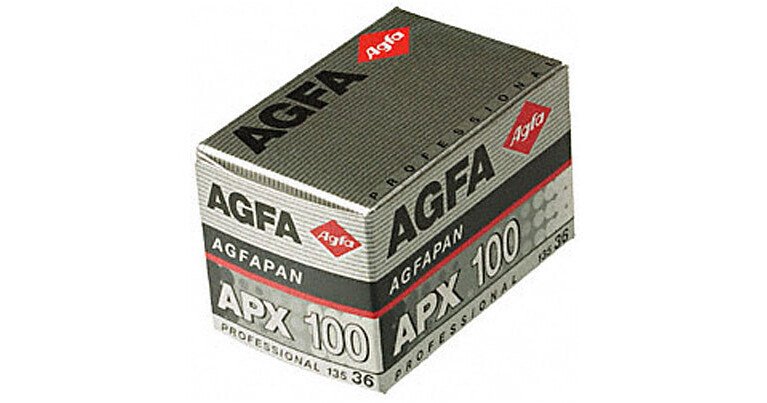
    Agfa APX 100

    The original Agfa APX 100 was one of my favorite traditional black-and-white films, with a distinctive character that I found particularly appealing.

    In my experience, APX 100 exhibited a distinctly silver-rich character, producing negatives with excellent tonal depth, pleasing grain, and forgiving exposure latitude. Unlike some of the newer, exceptionally fine-grained emulsions, APX 100 retained what I considered a more traditional photographic appearance, reminiscent of the great photojournalistic images of the 1950s and 1960s.

    Its tonal characteristics seemed particularly well suited to documentary photography, where atmosphere and emotional impact can be just as important as technical perfection. I can easily imagine its rendering being used to document the construction of the Berlin Wall in 1961, capturing the starkness and gravity of that historical moment. Its traditional grain structure and tonal depth could lend themselves beautifully to portraying the bleak, utilitarian architecture associated with parts of Cold War East Berlin.

    Although the original German-made Agfa APX 100 emulsion is no longer manufactured, photographers can still purchase film under the AgfaPhoto APX 100 name. However, the modern film uses a different formulation and should not be considered identical to the original. Its grain structure, contrast, and tonal characteristics deserve to be evaluated independently. My observations above concern the original Agfa emulsion, not its contemporary namesake.

    Further Reading:

    For readers interested in seeing photographs produced with the original Agfa APX 100 emulsion, photographer Jim Grey offers an illustrated account of his experience using this classic black-and-white film. His photographs provide an opportunity to appreciate the tonal qualities and traditional photographic character that made the original APX 100 such a memorable film.

    Where to buy:

    The original Agfa APX 100 emulsion is discontinued. The following retailer offers the modern AgfaPhoto APX 100, a different film sold under the APX name.

    KEH

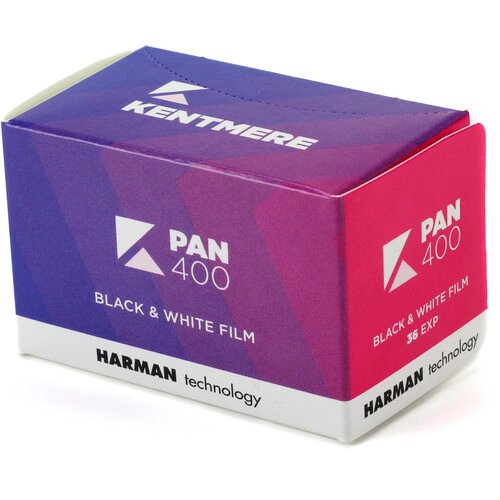
    Kentmere, affordable traditional black and white films

    Kentmere black-and-white films offer photographers an affordable introduction to traditional film photography without sacrificing dependable performance. Manufactured by Harman Technology, the company behind Ilford photographic products, Kentmere films provide a practical alternative to more expensive emulsions.

    The Kentmere range is particularly appealing to students, beginners, and experienced photographers who shoot frequently and want to keep their film costs manageable. These films offer good sharpness, pleasing tonal reproduction, and sufficient exposure latitude for a variety of photographic applications.

    Although they may lack some of the refined characteristics of premium emulsions, Kentmere films are capable of producing excellent negatives when properly exposed and developed. Their affordability also encourages experimentation with exposure, development, and printing techniques, an important part of learning traditional black-and-white photography.

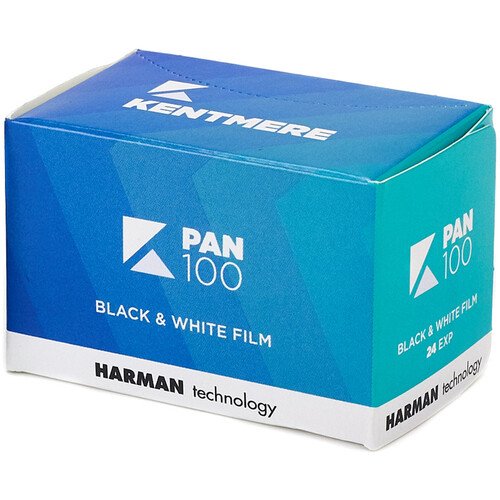
    Kentmere Pan 100

    Kentmere Pan 100 is a traditional, fine-grained black-and-white film with a nominal sensitivity of ISO 100. Particularly well suited to photography in good lighting conditions, it offers pleasing tonal gradation and a relatively fine grain structure, making it an attractive choice for landscapes, architecture, portraiture, and general photography. Its economical price also makes it appealing to students learning the fundamentals of exposure, film development, and darkroom printing. For photographers who appreciate the traditional appearance of silver-based black-and-white photography, Kentmere Pan 100 offers an accessible starting point.

    Explore Obsidian Urbox for a detailed look at Kentmere Pan 100 in action.

    Where to buy:

    B&H Photo

    Amazon two-pack

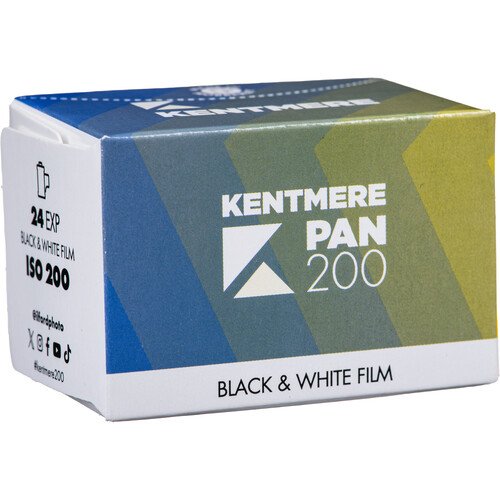
    Kentmere Pan 200

    Kentmere Pan 200, introduced in 2025, offers an additional stop of sensitivity when compared with Kentmere Pan 100, while retaining relatively fine grain and a distinctive tonal character. Early reviews suggest that its rendering makes it particularly interesting for street photography, architecture, and subjects where greater tonal separation is desirable. For photographers who want greater flexibility than ISO 100 provides, but who don’t require the additional speed of Kentmere Pan 400, Pan 200 may represent a balanced and economical choice.

    For readers interested in examining photographs produced with Kentmere Pan 200, PetaPixel offers an illustrated review with sample photographs and firsthand observations. The article discusses the film’s contrast, grain structure, and versatility, providing a useful opportunity to explore its photographic characteristics.

    Kentmere Pan 200 Review | PetaPixel

    Where to buy:

    B&H Photo

    Kentmere Pan 400

    Kentmere Pan 400 is a traditional black-and-white film offering an ISO sensitivity of 400, making it particularly useful for handheld photography, street photography, documentary work, and situations where lighting conditions may be less than ideal. Its higher sensitivity allows photographers to use faster shutter speeds or smaller apertures than would be practical with slower films. Although its grain is generally more noticeable than that of Kentmere Pan 100 or 200, this can contribute to the distinctive character associated with traditional black-and-white photography. For students and enthusiasts seeking an economical, versatile film suitable for a wide variety of subjects and lighting conditions, Kentmere Pan 400 represents an appealing option.

    For readers interested in exploring the photographic capabilities of Kentmere Pan 400, photographer Matt Osborne offers an illustrated review featuring examples of his work and observations drawn from first-hand experience. His article examines the film’s grain structure, tonal qualities, and performance under various photographic conditions, providing readers with a useful perspective on its versatility and suitability for traditional black and white photography.

    Where to buy:

    B&H Photo

    Final Thoughts

    The films discussed here represent only a portion of the choices available to today’s black-and-white photographer. Each possesses characteristics that may appeal to different photographic styles, subjects, and personal preferences. Yet selecting an emulsion is only the beginning. The photographer’s decisions regarding exposure, developer selection, dilution, and processing technique can profoundly influence the character of the resulting negative. There is no single combination that will satisfy every photographer or every photographic situation. Much of the pleasure of traditional photography lies in experimentation, developing an understanding of one’s materials, and discovering the combinations that best express one’s photographic vision. In our next discussion, we will explore black-and-white film developers and the important role they play in transforming an exposed film into a negative worthy of the darkroom.

  • Black and White Film Developers

    Choosing the Right One for Your Film

    Black-and-white film developers play an important role in determining the final appearance of a photographic negative. The choice of developer can influence grain, sharpness, contrast, and tonal gradation. While many developers work well with a variety of films, some combinations offer particular advantages. This guide examines several widely used developers and their characteristics, helping photographers select a suitable developer for the films they have chosen.

    Traditional And General Purpose Developers

    Kodak D-76

    Kodak D-76 is a traditional, general-purpose black-and-white film developer valued for its fine grain, good sharpness, and pleasing tonal gradation. Supplied as a powder that is mixed with water, it can be used at full strength or diluted to suit different processing preferences. D-76 is compatible with a wide variety of black-and-white films, including Kodak Tri-X 400, Ilford FP4 Plus, Ilford HP5 Plus, and Kentmere films. Its versatility and dependable results make it an excellent choice for beginners and experienced darkroom photographers alike.

    Where to buy:

    B&H Photo

    Amazon

    Kodak D-76 and Ilford ID-11: A Comparison

    Kodak D-76 and Ilford ID-11 are closely related, traditional fine-grain film developers that produce nearly identical photographic results. Both use similar developing agents and offer comparable grain structure, sharpness, contrast, and tonal gradation. Although their formulations are not necessarily identical, the differences are generally insignificant in everyday photographic use. Many photographers use them interchangeably, making either an excellent choice for general black-and-white film development. Recommended processing times should still be checked for the particular film being used.

    Ilford ID-11

    Ilford ID-11 is a versatile, fine-grain black-and-white film developer known for its consistent results, excellent tonal gradation, and good sharpness. Supplied as a powder that is mixed with water, it can be used at full strength or diluted 1:1 or 1:3 to accommodate different processing preferences. ID-11 is particularly well suited to Ilford Pan F Plus, FP4 Plus, and HP5 Plus, as well as Kodak Tri-X and Kentmere films. Its dependable performance and broad compatibility make it an excellent general-purpose developer for beginners and experienced photographers alike.

    Where to buy:

    B&H Photo

    Amazon

    Kodak HC-110

    Kodak HC-110 is a highly concentrated liquid black-and-white film developer valued for its versatility, convenient mixing, and good storage characteristics. Unlike powdered developers such as Kodak D-76 and Ilford ID-11, HC-110 is supplied as a liquid concentrate that must be diluted with water before use. Kodak recommends it for a variety of black-and-white films, including Tri-X 400, and provides several dilution options to accommodate different processing methods. Suitable for both normal and push processing, HC-110 offers photographers flexibility in controlling negative contrast through development time and technique. Its convenient preparation and storage characteristics make it particularly appealing to photographers who develop film intermittently.

    Where to buy:

    B&H Photo

    Amazon

    Fine-Grain and Modern Developers

    Ilford Ilfotec DD-X

    Ilford Ilfotec DD-X is a versatile liquid black-and-white film developer designed to produce fine grain, excellent sharpness, and a full range of tones from detailed shadows to bright highlights. It is particularly well suited to Ilford’s Delta Professional films, including Delta 100, Delta 400, and Delta 3200, but also produces excellent results with traditional emulsions such as Pan F Plus, FP4 Plus, and HP5 Plus. DD-X is especially useful for push processing faster films while maintaining good shadow detail and overall image quality. Supplied as a liquid concentrate, it is normally diluted 1+4 for processing. Its broad compatibility and dependable performance make it an excellent choice for photographers seeking a versatile, high-quality developer.

    Where to buy:

    B&H Photo

    Amazon

    Ilford Ilfosol 3

    Introduced in 2008 as the successor to Ilfosol S, Ilford Ilfosol 3 is a concentrated liquid black-and-white film developer known for its fine grain, good sharpness, and pleasing tonal gradation. Particularly well suited to slower and medium-speed films such as Pan F Plus, FP4 Plus, and Delta 100, it offers convenient single-use processing at dilutions of 1+9 or 1+14. Ilfosol 3 was introduced with improved keeping properties over its predecessor, although its relatively short shelf life after opening remains a consideration. Economical for processing small quantities of film, it may be less cost-effective than longer-lasting developers such as HC-110 or Rodinal for occasional darkroom use.

    Further Reading:

    Ilfosol S versus Ilfosol 3 — Photrio discussion (2010)

    Where to buy:

    B&H Photo

    Kodak XTOL

    Introduced in 1996, Kodak XTOL is an ascorbic-acid-based black-and-white film developer renowned for its fine grain, excellent sharpness, pleasing tonal gradation, and effective film-speed utilization. Compatible with a wide range of films, including Kodak Tri-X, T-Max, and Ilford HP5 Plus, XTOL is particularly valued for its ability to preserve shadow detail and produce workable negatives under less-than-ideal exposure conditions. This forgiving character makes it an especially attractive choice for students still mastering exposure and development, as well as experienced photographers working in difficult lighting. Supplied as a powder mixed with water, XTOL offers an excellent balance of image quality, versatility, and practical reliability.

    Where to buy:

    B&H Photo

    Ilford Perceptol

    Ilford Perceptol is a traditional powder-based black-and-white film developer designed to produce exceptionally fine grain, smooth tonal gradation, and excellent image quality. Particularly well suited to films such as Ilford FP4 Plus, HP5 Plus, and Pan F Plus, it is valued by photographers seeking subtle tonal separation and negatives capable of producing beautifully detailed enlargements. Perceptol can be used at full strength or diluted 1+1 or 1+3, although dilution affects its grain characteristics and apparent sharpness. Its principal compromise is a reduction in effective film speed, often requiring additional exposure to preserve shadow detail. For photographers who value fine grain and rich tonal rendering over maximum film speed, Perceptol remains a compelling choice.

    Further Reading:

    HP5+ in Perceptol — Richard Pickup

    HP5+ and FP4 with Perceptol

    Where to buy:

    B&H Photo

    Film-Speed and Push-Processing Developers

    Kodak T-Max Developer

    Kodak T-Max Developer is a concentrated liquid black-and-white film developer designed to provide fine grain, good sharpness, pleasing tonal gradation, and effective film-speed utilization. Although developed with Kodak’s T-Max films in mind, it also performs well with traditional emulsions such as Kodak Tri-X 400 and Ilford HP5 Plus. Normally diluted 1+4, it offers convenient preparation and consistent results with a wide variety of films. Its ability to maintain useful shadow detail makes it an attractive choice for photographers seeking good image quality under both ordinary and challenging lighting conditions.

    T-Max Developer is also particularly useful with Kodak T-Max P3200, a specialized film intended for push processing at high exposure indices. This combination allows photographers to work in low light or at night, where conventional film speeds may be insufficient.

    Where to buy:

    B&H Photo

    Ilford Microphen

    Ilford Microphen is a fine-grain, powder-based black-and-white film developer particularly valued for its effective film-speed utilization and ability to control grain during push processing. Suitable for everyday development of films such as Ilford HP5 Plus and Kodak Tri-X 400, it produces good tonal gradation and useful shadow detail while maintaining a pleasing grain structure. Microphen is especially advantageous when faster films must be exposed at higher-than-normal exposure indices, making it a practical choice for available-light photography, documentary work, and other demanding conditions. It can be used at full strength or diluted 1+1 or 1+3, offering flexibility for different processing preferences.

    Further Reading:

    Ilford Microphen Film Developer Review — Dmitri, Analog.Cafe

    Where to buy:

    B&H Photo

    High-Acutance Developers

    High-acutance developers are valued for their ability to produce pronounced edge definition and a strong impression of sharpness in black-and-white negatives. Rodinal is among the best-known examples, but other formulations also deserve consideration. Geoffrey Crawley’s FX-1, available from Photographers’ Formulary, is a classic high-acutance developer designed to emphasise fine detail, while Photographers’ Formulary Pyrocat-HD combines high acutance with the distinctive characteristics of a staining developer.

    For a more detailed examination of FX-1, Pyrocat-HD, and other specialized formulations, see our guide to [Specialty Black-and-White Film Developers].

    ADOX Rodinal (Originally Agfa Rodinal)

    Originally introduced by Agfa in 1891, Rodinal is a classic liquid black-and-white film developer renowned for its exceptional acutance and distinctive rendering of grain. Unlike fine-grain developers that soften the appearance of grain, Rodinal emphasizes edge sharpness while preserving the natural grain structure of traditional films such as Kodak Tri-X 400. This combination can produce crisp, richly textured negatives reminiscent of classic twentieth-century photojournalism. Its concentrated formulation, flexible dilutions, and remarkable storage life have made Rodinal a lasting favourite among darkroom photographers.

    Further Reading:

    Together — Lilly Schwartz (Kodak Tri-X stand-developed in Rodinal, with sample photographs)

    Rodinal Should Be Your First Black and White Film Developer: Here’s Why — Daren, Learn Film Photography

    Where to buy:

    B&H Photo

    Amazon

  • Choosing Black-and-White Photographic Paper: A Practical Guide

    Resin-Coated (RC) vs. Fiber-Based (FB) Photographic Paper

    Black-and-white photographic papers fall into two principal categories: resin-coated (RC) and fiber-based (FB). Both produce excellent prints, but they differ in processing requirements, handling characteristics, and long-term preservation.

    Resin-Coated (RC) Paper

    RC paper features a polyethylene-coated base that allows for shorter washing times, faster drying, and prints that generally remain flat. Its convenience and economy make it ideal for contact sheets, test prints, and everyday darkroom work. Modern RC papers offer improved image stability, although their long-term preservation record is less established than that of traditional fiber-based papers.

    Fiber-Based (FB) Paper

    FB paper uses a traditional absorbent paper base, typically with a baryta layer beneath the emulsion. It requires longer washing and careful drying to minimize curling. Properly processed and stored fiber-based silver-gelatin prints have a documented preservation record extending beyond a century, making them a well-established choice for archival and fine-art photography.

    Which Should You Choose?

    RC paper offers convenience, economy, and excellent image quality. FB paper demands more time and attention but provides traditional surface characteristics and a longer-established archival record. The choice depends on your printing goals, working methods, and preservation priorities.

    A Note on Paper Sizes, Surfaces, and Quantities

    Purchasing links in this guide generally feature 8 × 10-inch packages containing 25 sheets. Other sizes, surface finishes, and package quantities may be available from the retailer.

    Photographic Paper Manufacturers

    Ilford Photo

    Ilford has been a leading name in black-and-white photography for more than a century. Manufactured in England by Harman Technology, Ilford photographic papers remain popular with beginners and experienced darkroom printers alike.

    Its Multigrade range offers variable-contrast papers in both resin-coated and fiber-based varieties, allowing photographers to control contrast through enlarger filtration.

    Among its principal offerings are:

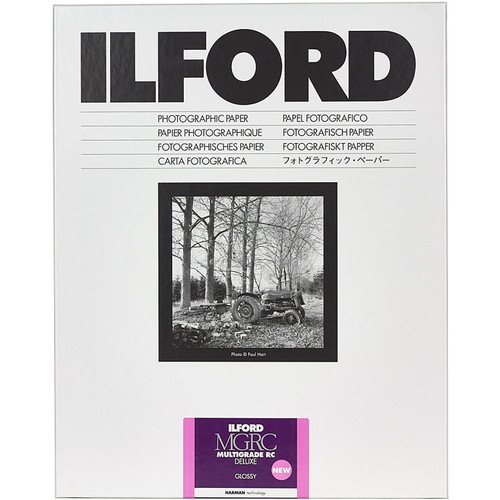
    Multigrade RC Deluxe:

    A versatile, easy-to-process paper suitable for beginners and everyday printing.

    Where to Buy:

    B&H Photo

    Amazon

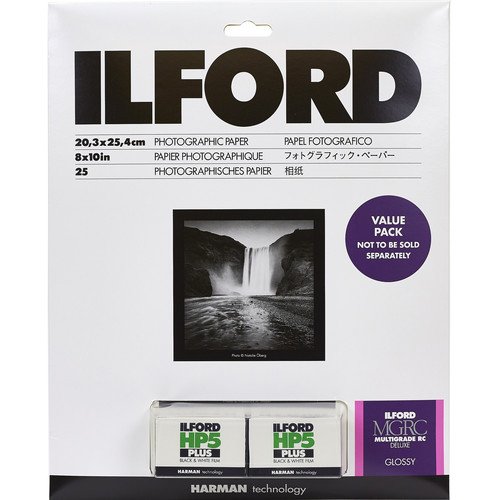
    Ilford offers this convenient and economical value pack:

    Multigrade RC Portfolio:

    A convenient value pack combining resin-coated, variable-contrast photographic paper with HP5 Plus black-and-white film, suitable for beginners and photographers exploring traditional darkroom printing.

    Where to buy:

    B&H Photo

    Amazon

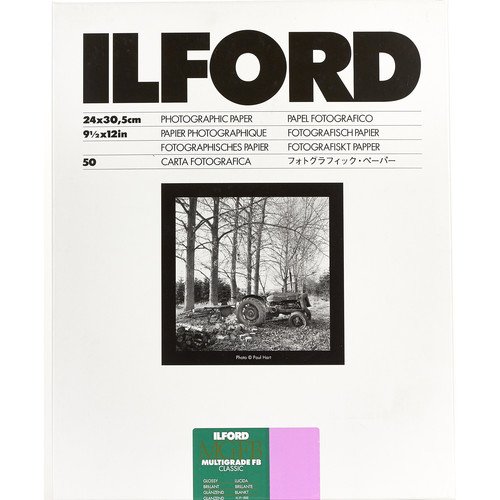
    Multigrade FB Classic:

    A traditional fiber-based paper offering neutral image tones, rich blacks, and excellent tonal separation.

    Where to buy:

    B&H Photo

    Amazon

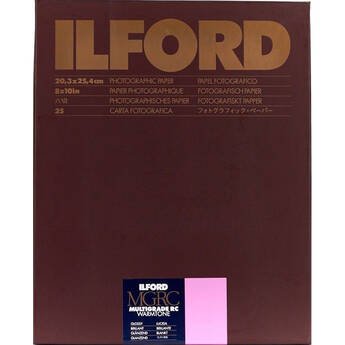
    Multigrade RC Warmtone:

    A resin-coated paper producing warm image tones and smooth tonal gradation, particularly suitable for portraits and traditional darkroom printing.

    Where to buy:

    B&H Photo

    Amazon

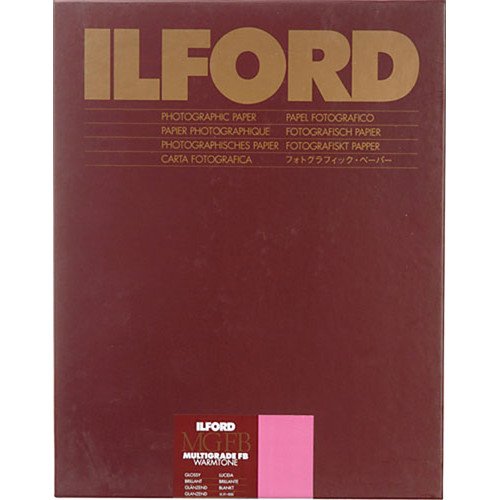
    Multigrade FB Warmtone:

    A fiber-based paper producing warmer image tones, particularly attractive for portraits and traditional fine-art printing.

    Where to buy:

    B&H Photo

    Amazon

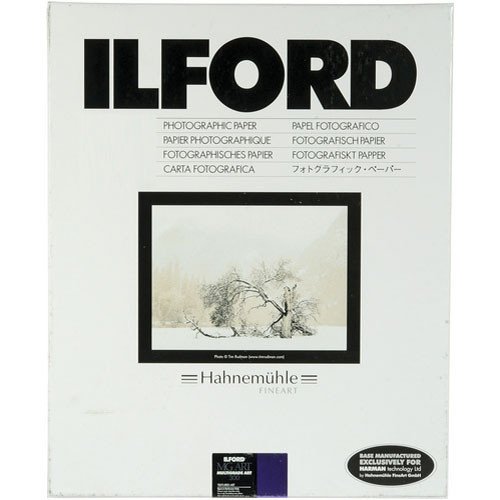
    Multigrade Art 300:

    A distinctive heavyweight cotton-rag paper with a textured matte surface and subtle eggshell sheen, particularly suited to fine-art presentation and toning.

    Where to buy:

    B&H Photo

    Amazon

    Foma Bohemia: A Distinctive Alternative to Ilford

    For photographers interested in exploring alternatives to the familiar Ilford range, Foma Bohemia offers an excellent selection of traditional black-and-white photographic papers. Manufactured in the Czech Republic, Foma papers have earned a following among darkroom enthusiasts for their distinctive tonal characteristics, variety of surfaces, and attractive pricing. From economical resin-coated papers to fiber-based products suitable for fine-art printing, Foma provides photographers with opportunities to experiment without compromising their artistic ambitions.

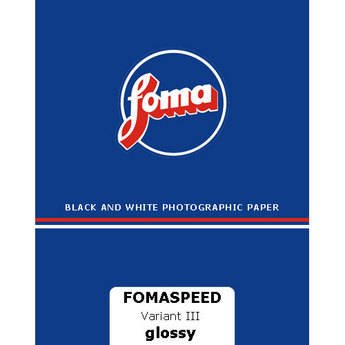
    Fomaspeed Variant 311:

    A variable-contrast, resin-coated paper with a glossy surface. Its convenient processing makes it suitable for everyday enlargements, contact sheets, and proof prints.

    Where to buy:

    B&H Photo

    Freestyle

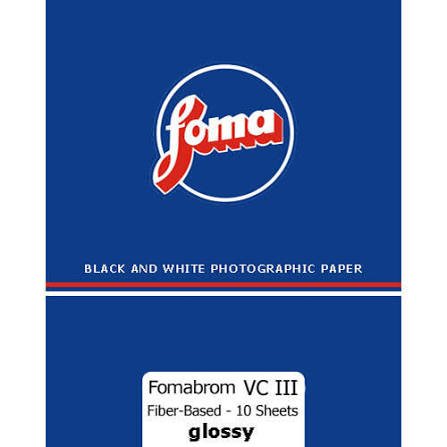
    Fomabrom Variant 111:

    A traditional fiber-based, variable-contrast paper with a glossy baryta surface, offering neutral image tones and excellent tonal control.

    Where to buy:

    B&H Photo

    Freestyle

    Fomatone MG Classic 131:

    A warmtone, fiber-based paper with a cream-colored base and semi-gloss surface. Particularly interesting for portraits, lith printing, and creative toning techniques.

    Where to buy:

    B&H Photo

    Amazon

    Freestyle

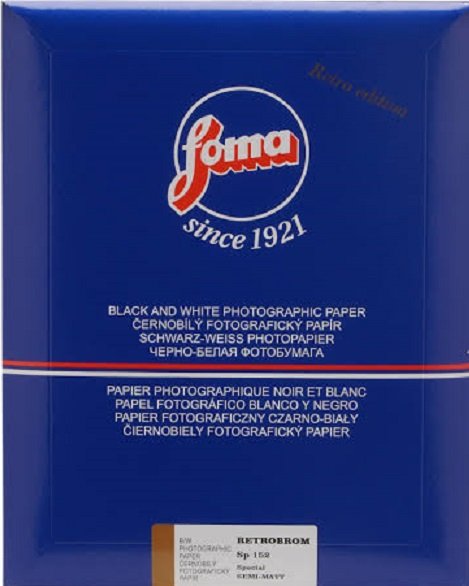
    FOMA Retrobrom 152:

    A semi-matte, fiber-based, fixed-grade black-and-white photographic paper featuring a distinctive warm greenish-brown image tone. Ideal for creating vintage-style photographs and expressive fine-art darkroom prints.

    Where to buy:

    B&H Photo

    Freestyle

    Bergger: A Distinctive Choice for Fine-Art Photography

    Bergger offers a selection of traditional black-and-white photographic papers valued for their tonal characteristics, distinctive surfaces, and suitability for fine-art darkroom printing. Its fiber-based papers provide photographers with additional creative options for producing expressive silver-gelatin prints.

    A Note on Bergger Resin-Coated Papers

    Bergger’s Prestige RC1 resin-coated paper is listed in glossy and lustre finishes but is currently marked as coming soon in the United States. We will revisit these products when they become readily available.

    Bergger Fiber-Based Photographic Papers

    The following Prestige papers offer a variety of image tones and surface finishes, allowing photographers to select materials that complement their individual printing styles.

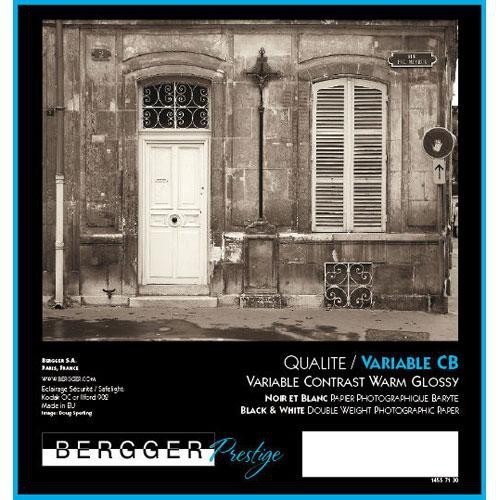
    Bergger Prestige Variable CB (Glossy)

    A warmtone, fiber-based, variable-contrast photographic paper with a glossy baryta surface, offering rich blacks and excellent tonal separation.

    Where to buy:

    B&H Photo

    Freestyle

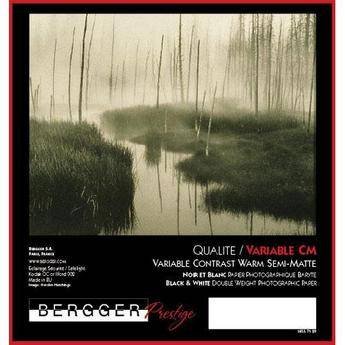
    Bergger Prestige Variable CM (Semi-Matte)

    A warmtone, fiber-based, variable-contrast photographic paper with a semi-matte surface, offering smooth tonal gradation and a subdued finish particularly suited to portraits and fine-art printing.

    Where to buy:

    B&H Photo

    Freestyle

    Final Thoughts: Choosing the Right Photographic Paper

    Choosing photographic paper is as much a creative decision as a technical one. Each manufacturer offers distinctive characteristics in image tone, contrast, surface texture, and overall appearance.

    While resin-coated papers provide convenience and ease of processing, fiber-based papers offer traditional finishing characteristics and a long-established archival record. Neither choice guarantees a better photograph; much depends on the negative, the printing process, and the photographer’s vision.

    Experimenting with different papers is one of the pleasures of traditional darkroom photography. A familiar negative can take on an entirely different character simply by changing the paper on which it is printed.

  • Choosing Your First 35mm Film Camera

    35mm Film Cameras: An Affordable Starting Point

    Getting started in traditional 35mm film photography need not require a substantial investment. The used-camera market offers an extensive selection of affordable, reliable cameras from respected manufacturers such as Nikon, Canon, Pentax, Minolta, and Olympus. Many feature interchangeable lenses and manual exposure controls, providing an excellent opportunity to learn the fundamentals of photography. Whether you’re a student discovering film for the first time or an experienced photographer returning to the medium, a well-maintained 35mm camera offers an appealing combination of versatility, portability, and photographic capability.

    Choosing a Used 35mm Camera

    Traditional single-lens reflex (SLR) cameras are particularly suitable for beginners because they allow photographers to view the scene directly through the taking lens while controlling exposure and focus. Although each manufacturer developed distinctive features and lens systems, mechanical condition, shutter accuracy, light seals, lens quality, and the availability of compatible equipment should take precedence over brand reputation when purchasing a used camera.

    Nikon 35mm Cameras

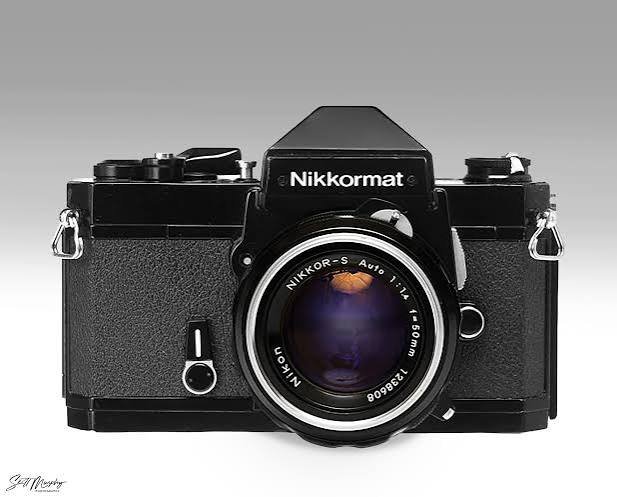
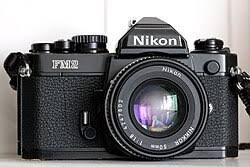
    Nikon has long been respected for its rugged construction, reliable operation, and excellent Nikkor lenses. Among its many manual-focus 35mm cameras, the Nikkormat FT series and Nikon FM and FM2 offer dependable mechanical operation, while the FE and FE2 provide manual exposure control alongside aperture-priority automation. These cameras remain excellent choices for students and photographers seeking traditional photographic controls.

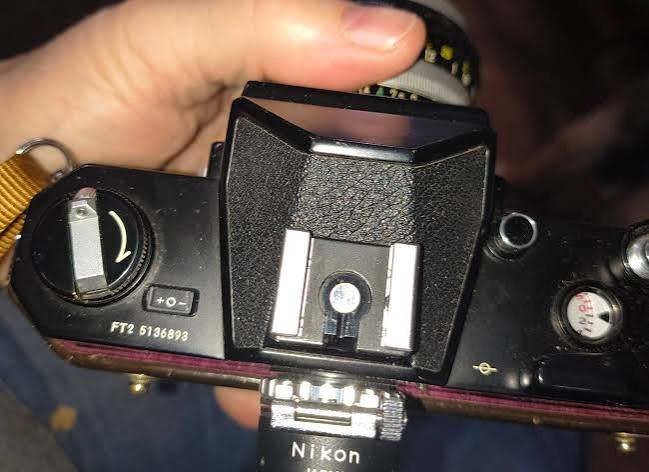
    My Nikkormat FT2

    My first serious camera was a Nikkormat FT2, a remarkably solid and dependable camera. One particularly useful feature was a small exposure-meter window on the top plate, also found on the Nikkormat FT, FTn, and later FT3 models, as well as the professional Nikon F equipped with certain Photomic viewfinders. This allowed exposure readings without raising the camera to eye level.

    For discreet street photography, I could preset focus using the distance and depth-of-field markings on Nikkor lenses and use a small accessory-shoe bubble level to help keep the camera horizontal.

    My Nikon FE and FE2

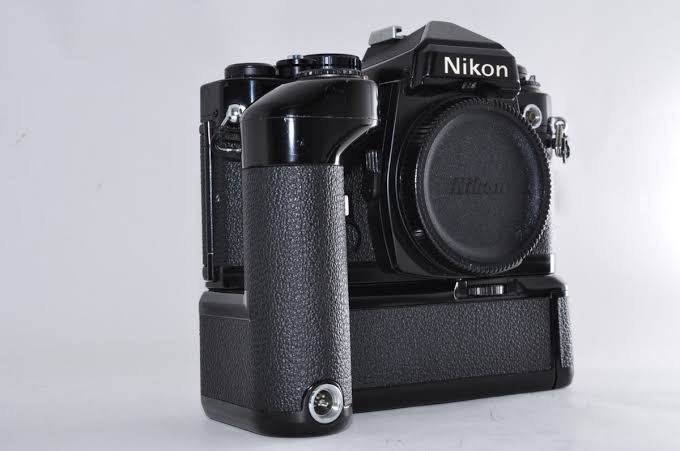
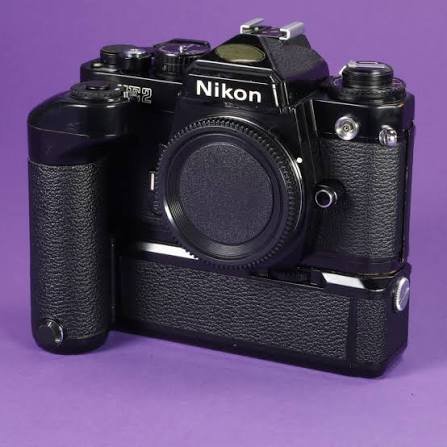
    I also own a Nikon FE equipped with an MD-11 motor drive and a Nikon FE2 fitted with an MD-12. Unlike my fully mechanical Nikkormat FT2, both cameras feature electronically controlled shutters, aperture-priority automation, and full manual exposure control. Their motor drives provide automatic film advance, making them particularly convenient for continuous shooting.

    Nikon’s F-Mount Lens System

    Another advantage of Nikon is its longstanding F-mount lens system, introduced in 1959. Nikon retained the basic bayonet mount for decades, giving photographers considerable flexibility when building a collection of lenses and camera bodies. However, aperture-coupling differences mean that compatibility should always be checked before purchasing older lenses. As with any used camera, mechanical condition, shutter operation, and meter accuracy remain important considerations.

    Nikkormat FT2, a rugged mechanical 35mm SLR introduced in 1975.

    The FT2’s top-mounted meter window allowed exposure readings without looking through the viewfinder.

    Nikon FE with MD-11

    Introduced in 1978, the Nikon FE offers manual exposure control and aperture-priority automation. The optional MD-11 motor drive provides automatic film advance for faster shooting.

    Nikon FE2 with MD-12

    Introduced in 1983, the Nikon FE2 features aperture-priority automation, manual exposure control, and a 1/4000-second shutter. The MD-12 motor drive provides automatic film advance.

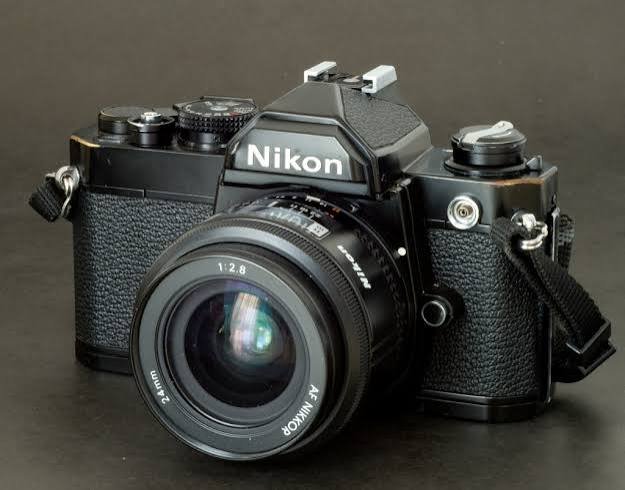
    Nikon FM

    Introduced in 1977, the Nikon FM is a rugged, fully mechanical 35mm SLR with manual exposure control and a built-in light meter. Its straightforward design makes it an excellent choice for beginners.

    The Nikon FM2, introduced in 1982, improved upon the FM with a faster 1/4000-second mechanical shutter and higher flash synchronization speed, while retaining Nikon’s rugged construction and F-mount lens system.

    Beyond these popular models, Nikon also developed an extensive range of professional 35mm SLR cameras, renowned for their durability, precision, and versatility. Many featured weather-resistant seals to protect against dust and moisture, making them particularly suitable for demanding working conditions. These rugged systems helped establish Nikon as one of the leading names in professional photography.
    For those interested in purchasing used equipment, reputable dealers such as KEH Camera and Adorama offer selections of pre-owned cameras, lenses and photographic equipment. Both are worth exploring when comparing prices, condition ratings, and availability.

    Canon 35mm Cameras

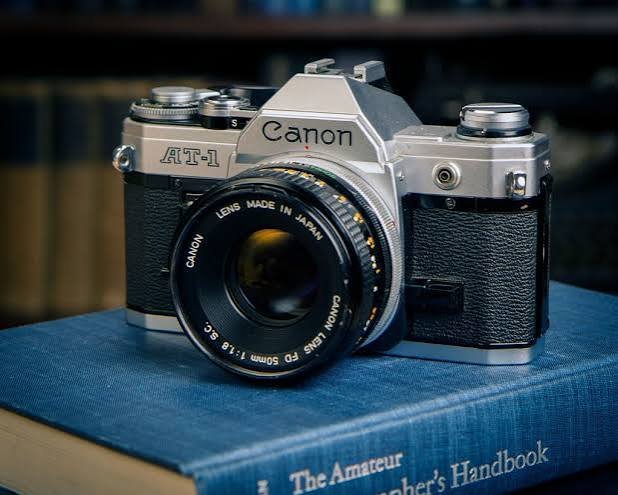
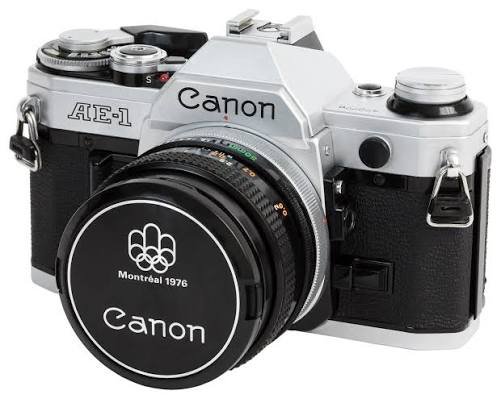
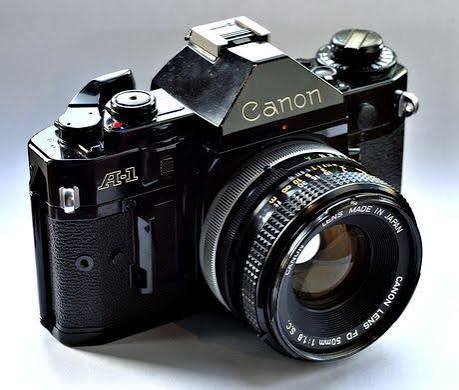
    From 1971 through 1990, Canon produced a wide range of manual-focus 35mm SLR cameras using its FD lens mount. These included the F-series, represented by the professional F-1 and the enthusiast-oriented FTb, and the more affordable A-series, designed primarily for amateur photographers, including the AT-1, AE-1, and A-1. In 1987, Canon introduced the modern EOS system, featuring autofocus, electronic controls, and the new EF lens mount, gradually replacing the older FD system.

    I owned a Canon AT-1, the manually operated counterpart to the enormously popular AE-1. Its match-needle exposure meter and straightforward controls made it particularly well suited to learning photography. Unlike the mechanical FTb, the AT-1 requires a battery to operate its electronically controlled shutter. All these cameras use Canon’s FD lens system, which offers an excellent selection of quality used lenses.
    Owning both a Nikkormat FT2 and a Canon AT-1 allowed me to become familiar with each system and decide which best suited my shooting style. Camera manufacturers understand that photographers develop preferences for a camera’s handling, control placement, and overall feel, often remaining loyal to a particular brand for years. It’s rather like the longstanding rivalry between Ford and Chevrolet owners.

    When purchasing a used Canon camera, buyers should consider lens compatibility and carefully examine shutter operation, electronics, light seals, and lens condition. The older FD and newer EF lens systems are not directly interchangeable.

    Canon AT-1

    Introduced in 1977, the Canon AT-1 features manual exposure control, match-needle metering, and Canon’s FD lens mount. Its simple controls make it an excellent camera for beginners.

    Canon AE-1

    Introduced in 1976, the Canon AE-1 combined shutter-priority automation with manual exposure control. Affordable and easy to use, it became a favorite among amateur photographers.

    Canon A-1

    Introduced in 1978, the Canon A-1 offered multiple automatic exposure modes alongside full manual control. Its advanced electronics made it a versatile choice for serious enthusiasts.

    Beyond its popular amateur models, Canon’s professional FD system centered on the F-1 family, including the original F-1, its updated successor, and the New F-1 introduced in 1981. Built for demanding professional use, these cameras offered rugged construction, extensive accessories, and improved protection against dust and moisture in later models. The advanced T90 further demonstrated Canon’s growing expertise in electronic camera design before the transition to EOS.

    Where to buy:

    Browse used Canon cameras at KEH and Adorama

    Pentax 35mm Cameras

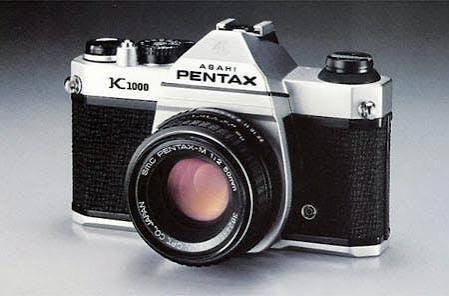
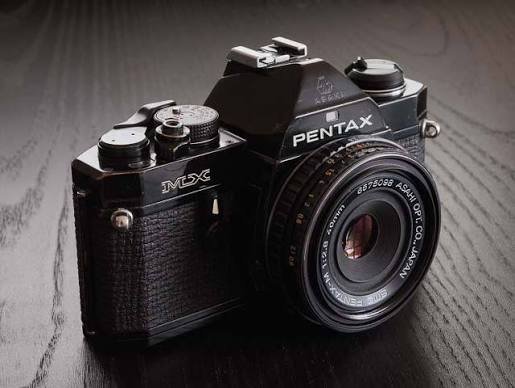
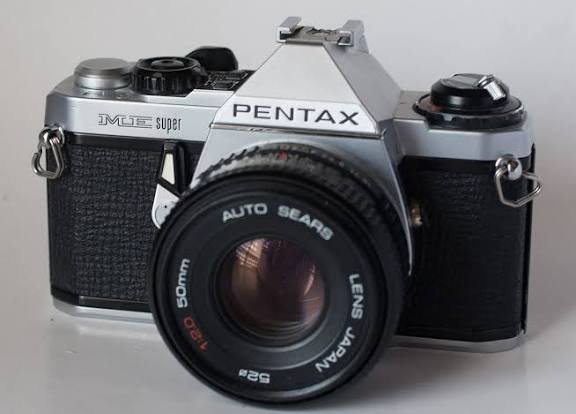
    Pentax introduced its K bayonet lens mount in 1975 with the K2, KX, and KM, followed by the enormously popular K1000 in 1976. The compact MX and ME models offered smaller, lighter alternatives, while later cameras such as the ME Super introduced more sophisticated exposure controls. These dependable cameras remain excellent choices for beginners, offering a variety of features and access to Pentax’s extensive K-mount lens system.

    Pentax’s SMC (Super Multi Coating) lenses are highly regarded for their optical quality. Their multilayer coatings help reduce flare and ghosting while improving contrast. Although Nikon’s Nikkor lenses have traditionally enjoyed greater prestige, I have always considered Pentax SMC lenses exceptional performers, particularly given their more affordable prices on the used market.

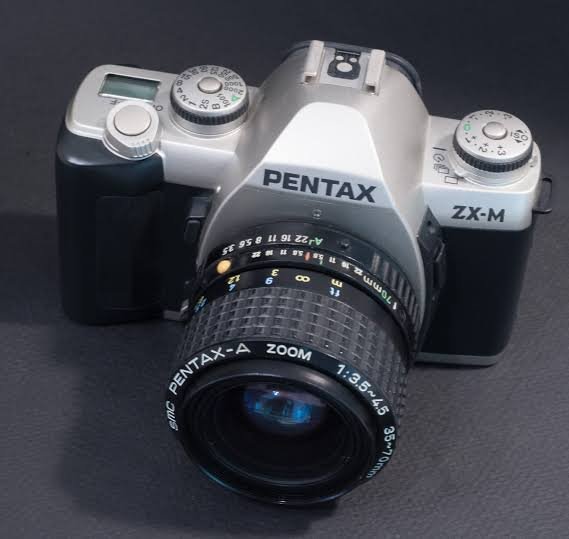
    Another interesting option is the Pentax ZX-M, also known as the MZ-M, which remained available into the early 2000s. Often sold as a kit with a compact 35–80mm zoom lens, this lightweight camera was particularly well suited to students. It offers manual focusing and full manual exposure control, along with optional automatic exposure modes. Unlike the older mechanical Pentax models, the ZX-M requires batteries to operate its electronic shutter.

    Pentax K1000

    Introduced in 1976, the Pentax K1000 is a fully mechanical 35mm SLR with manual exposure control and a built-in light meter. Its simplicity made it a favorite among photography students.

    Pentax MX

    Introduced in 1976, the Pentax MX is a compact, fully mechanical 35mm SLR featuring manual exposure control and Pentax’s K-mount lens system. Its small size and rugged construction made it a favorite among enthusiasts.

    Pentax ME Super

    Introduced in 1979, the Pentax ME Super is a compact 35mm SLR offering manual and aperture-priority exposure control with Pentax K-mount lenses.

    Pentax ZX-M (MZ-M)

    Introduced in 1997, the ZX-M features a split-image focusing screen, depth-of-field preview, and automatic film advance. It also offers exposure compensation, autoexposure bracketing, and a built-in self-timer, all in a lightweight package.

    Where to buy:

    Browse used Pentax film cameras at KEH and Adorama.

    Minolta 35mm Cameras

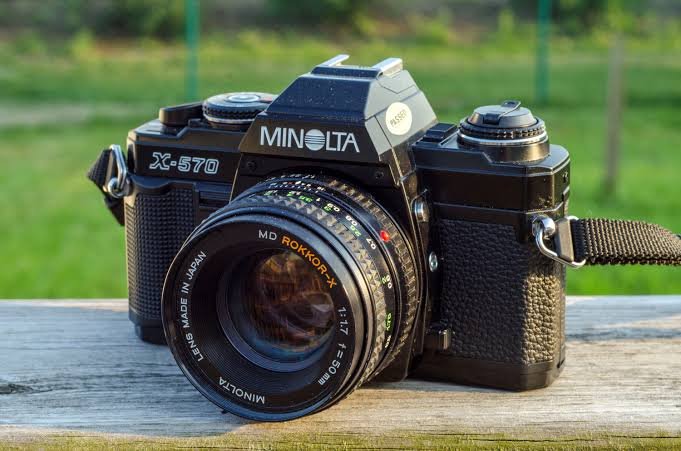
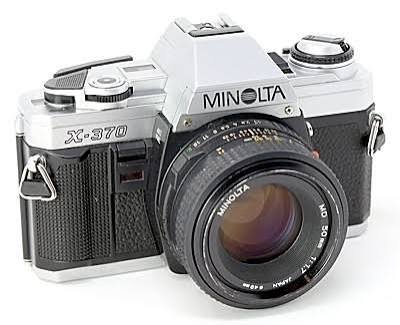
    Minolta earned an excellent reputation for producing affordable, reliable 35mm SLR cameras and high-quality Rokkor lenses. Among its most appealing models for photography students are the X-700, X-570, and X-370, introduced during the early 1980s. These lightweight cameras combine full manual exposure control with automatic exposure options, making them particularly suitable for beginners learning traditional film photography.
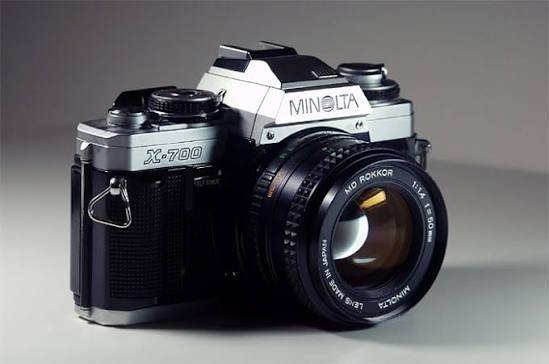
    Introduced in 1981, the Minolta X-700 became one of the company’s most popular 35mm SLR cameras. It offers full manual exposure control, aperture-priority automation, and a programmed exposure mode that automatically selects both shutter speed and aperture. This versatility makes it particularly attractive to beginners who want to develop their photographic skills while retaining the convenience of automatic operation.

    The Minolta X-570, introduced in 1983, is another excellent choice for photography students. Although it lacks the X-700’s programmed exposure mode, it offers full manual control and aperture-priority automation. Its useful viewfinder display shows both the selected and metered shutter speeds, making it particularly well suited to learning manual exposure.

    Introduced in 1984, the Minolta X-370 provided a simpler, more affordable alternative. Featuring manual exposure control and aperture-priority automation, it delivers the essential functions needed for traditional film photography without unnecessary complexity.

    All three cameras use Minolta’s manual-focus SR lens mount, providing access to an extensive selection of excellent MC and MD Rokkor lenses, often available at reasonable prices on the used market. When purchasing these cameras, buyers should carefully examine shutter operation, exposure-meter accuracy, light seals, and electronic functions. All three require batteries to operate their electronically controlled shutters, and age-related electrical problems, particularly failing capacitors, should also be considered.

    Minolta X-700
    With its comfortable handling, informative viewfinder, and excellent selection of Rokkor lenses, the X-700 is a practical camera for photographers developing their skills.

    Minolta X-570
    The X-570 features exposure lock for challenging lighting conditions and a depth-of-field preview button to check sharpness before shooting. An excellent alternative to the X-700.

    Minolta X-370
    Lightweight, uncomplicated, and economical, the X-370 is an appealing choice for students seeking their first interchangeable-lens film camera.

    Where to buy:

    Browse used Minolta Cameras at KEH and Adorama

    Olympus 35mm Cameras

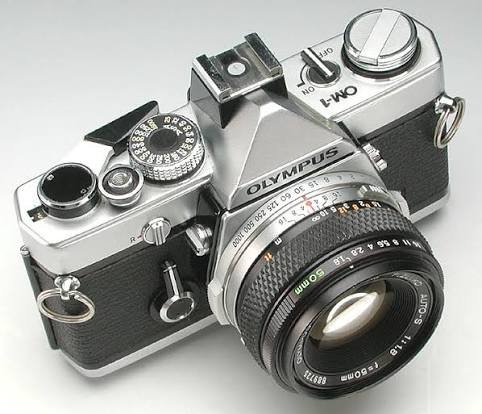
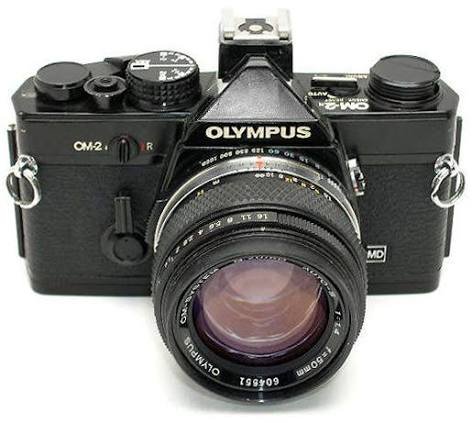
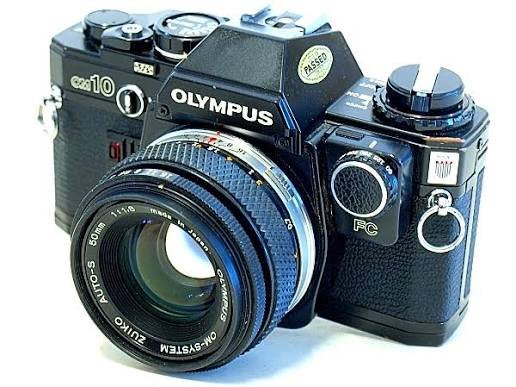
    Olympus earned an excellent reputation for producing compact, lightweight 35mm SLR cameras with excellent build quality and precision optics. Among its most popular models, the OM-1, OM-2, and OM-10 offer attractive choices for beginners and enthusiasts seeking reliable, affordable film cameras.

    Introduced in 1972, the Olympus OM-1 features a fully mechanical shutter, manual exposure controls, and a built-in light meter. Its compact design, quiet operation, and excellent handling make it particularly appealing for students, travel, and street photography.
    The Olympus OM-2, introduced in 1975, retains the OM-1’s compact design while adding aperture-priority automatic exposure and sophisticated through-the-lens metering. Full manual control makes it an excellent choice for photographers who appreciate both convenience and creative flexibility.

    Introduced in 1979, the affordable Olympus OM-10 offers aperture-priority automatic exposure in a lightweight, easy-to-use body. An optional manual adapter allows photographers to select shutter speeds themselves, making it an appealing entry-level camera.

    Other noteworthy models include the improved OM-2N, the OM-G (OM-20), and the advanced OM-4, which offers sophisticated multi-spot metering.

    All these cameras benefit from Olympus’s extensive selection of compact, high-quality Zuiko lenses. When purchasing used equipment, buyers should examine shutter operation, meter accuracy, lens condition, and light seals. Early OM-1 cameras require special consideration because their meters were designed for discontinued mercury batteries. The OM-2 and OM-10 require batteries for shutter operation.

    For photographers seeking quality, portability, and traditional photographic controls, the Olympus OM system remains an excellent choice.

    Olympus OM-1
    The OM-1 features a shutter-speed control ring around the lens mount and a mirror lock-up mechanism to reduce vibration during tripod photography. A thoughtful design for serious photographers.
    Olympus OM-2
    Featuring interchangeable focusing screens, exposure compensation, and compatibility with motorized film advance, the OM-2 offers impressive versatility in a remarkably small camera.

    Olympus OM-10
    The OM-10 features an LED shutter-speed display in the viewfinder and a built-in self-timer. Its straightforward operation makes it particularly appealing to newcomers to film photography.
    Where to buy: Browse used Olympus cameras at KEH and Adorama

    Final Thoughts

    Choosing your first 35mm film camera is as much about finding a camera that feels comfortable in your hands as it is about selecting a particular brand or model. The cameras discussed here represent only a small selection of the remarkable equipment produced during the heyday of film photography. Many remain capable of producing outstanding photographs decades after leaving the factory, and with proper care, they can continue serving photographers for years to come.
    For those who would prefer to purchase a newly manufactured film camera rather than a vintage model, we will also be exploring the options available today in a separate article, “New 35mm Film Cameras.”

  • Choosing Your First Medium-Format Film Camera

    For photographers interested in moving beyond 35mm, the used-camera market offers a wide variety of medium-format cameras at different price points. Twin-lens reflex and single-lens reflex systems each provide a different approach to working with 120 film. Common negative sizes include 6×4.5, 6×6, and 6×7 cm, all substantially larger than a 35mm frame. Many older cameras are fully mechanical and can be operated without batteries, making them attractive to photographers who appreciate simplicity and direct control. When choosing a used medium-format camera, mechanical condition, shutter operation, lens quality, and film transport deserve careful attention.

    The larger negatives produced by medium-format cameras offer greater potential for fine detail, smoother tonal gradation, and larger enlargements than 35mm film. However, photography students, particularly those studying fine art, may also enjoy experimenting with inexpensive plastic cameras such as the Holga and Diana. Although many of these cameras use 120 film, their simple lenses produce soft images, vignetting, and other optical imperfections that some photographers deliberately seek for artistic effect. They offer an affordable introduction to the format, but are not the best choice for those seeking the sharpness and image quality normally associated with medium-format photography.
    Twin-Lens Reflex Cameras: A Traditional Approach to Medium Format

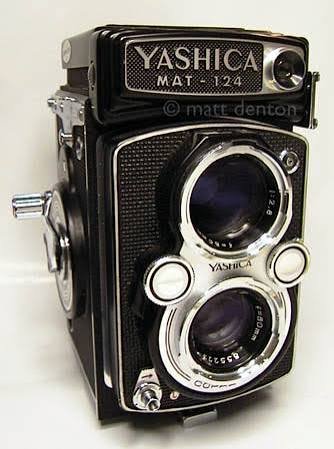
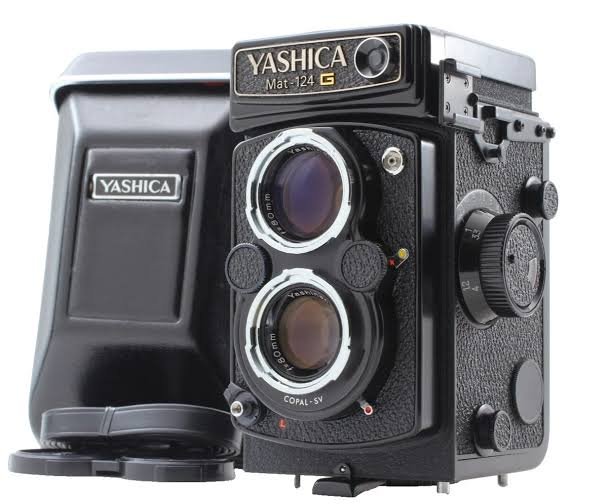
    Yashica Mat-124

    The Yashica Mat-124 was a popular Japanese twin-lens reflex camera, producing twelve 6×6 cm negatives on 120 film. Equipped with an 80mm Yashinon taking lens, a built-in exposure meter, and crank-operated film advance, it offered many of the conveniences found in more expensive medium-format cameras. An adjustable film pressure plate allowed the camera to accommodate both 120 and 220 roll film, with the latter providing up to 24 exposures per roll.

    My first twin-lens reflex was a Yashica Mat-124, acquired in the early 1990s. Although it was probably already twenty years old, it generally performed well and introduced me to the pleasures of medium-format photography. However, I experienced recurring film-advance problems, including irregular frame spacing and partially exposed frames, which required repairs on several occasions.
    Yashica Mat- 124 G

    Despite these difficulties, the Yashica Mat-124 was a capable camera that produced excellent photographs when functioning properly. Yashica subsequently introduced the Mat-124G, an updated version featuring gold-plated electrical contacts in its exposure-meter circuitry, revised internal components, and distinctive black trim. Although the improvements were relatively modest, the 124G became one of Yashica’s best-known twin-lens reflex cameras and remains popular among medium-format enthusiasts. Both models are worth considering, but prospective buyers should carefully examine the film-advance mechanism, shutter operation, exposure meter, and lens condition before purchasing.

    Produced from 1970 to 1986, the Yashica Mat-124G was among the last traditional twin-lens reflex cameras. Its waist-level viewfinder and classic handling remain appealing to medium-format enthusiasts.

    Where to buy: Browse Yashica Mat 124 cameras at KEH and Adorama

    Rolleicord

    Rolleicord cameras, manufactured by Franke & Heidecke in Germany, offered a more affordable alternative to the company’s professional Rolleiflex models. Although generally simpler in design and operation, many Rolleicords were equipped with excellent lenses capable of producing remarkably sharp photographs.

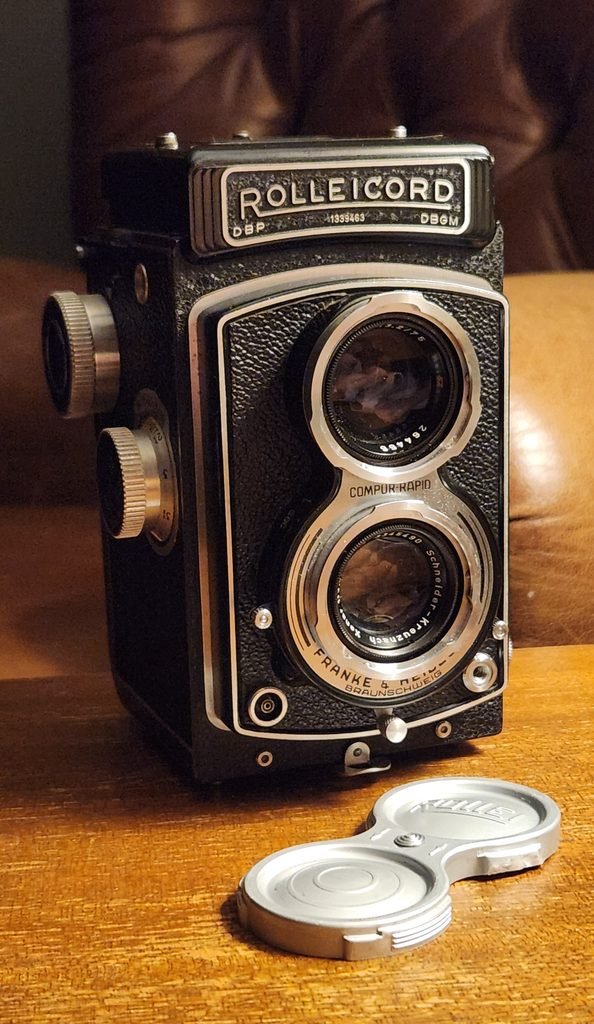
    After owning my Yashica Mat-124, I acquired a Rolleicord manufactured in 1952, fitted with a Schneider-Kreuznach Xenar 75mm lens. I was able to confirm its year of manufacture by contacting the company in Germany and providing the camera’s serial number. Despite its age and relatively simple design, the camera produced beautifully sharp, clear negatives and proved a pleasure to use.

    Over time, I also managed to obtain several accessories, including lens filters, which were becoming increasingly difficult to find. The camera remains in my collection today and is one of my most cherished pieces of photographic equipment.

    For photographers considering a used Rolleicord, careful attention should be given to shutter operation, lens condition, focusing accuracy, and the availability of accessories. A well-maintained example can still deliver outstanding photographic results without the expense of a comparable Rolleiflex.

    My 1952 Rolleicord

    Fitted with a Schneider-Kreuznach Xenar 75mm lens, this near mint condition Rolleicord remains a treasured part of my collection. More than seven decades later, it stands as a testament to the precision craftsmanship and enduring quality of German camera manufacturing.

    Other Twin-Lens Reflex Cameras Worth Considering

    Beyond Yashica and Rolleicord, several manufacturers produced excellent twin-lens reflex cameras. The Minolta Autocord and Ricoh Diacord remain respected examples, although finding well-maintained cameras for sale can require patience. Rolleiflex cameras, manufactured by Franke & Heidecke in Germany, established an exceptional reputation among professional photographers for their precision engineering, superb optics, and outstanding build quality. Although generally more expensive than their Rolleicord counterparts, well-maintained examples remain highly desirable.

    Rolleiflex

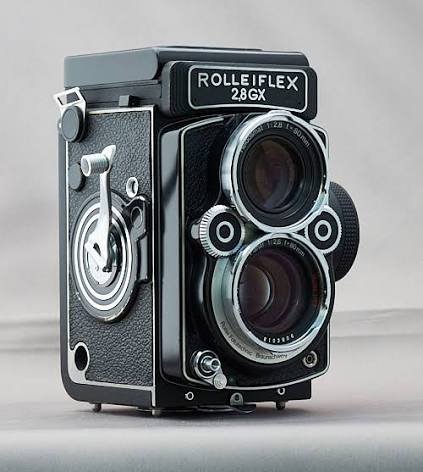
    Rolleiflex twin-lens reflex cameras were offered with several lens options, including models fitted with 75mm f/3.5 optics. Among the most prestigious were the 2.8 versions, equipped with fast 80mm f/2.8 Carl Zeiss Planar or Schneider Xenotar lenses. Decades of refinement culminated in the Rolleiflex 2.8 GX, introduced in 1987, which combined the classic twin-lens reflex design with modern through-the-lens exposure metering.

    The Rolleiflex became a favorite among professional portrait, fashion, and documentary photographers. Its exceptional build quality, precise controls, and beautifully engineered mechanics helped establish its reputation as one of the finest twin-lens reflex cameras ever made.

    Where to buy: Browse Rolleiflex cameras at KEH and Adorama

    Mamiya

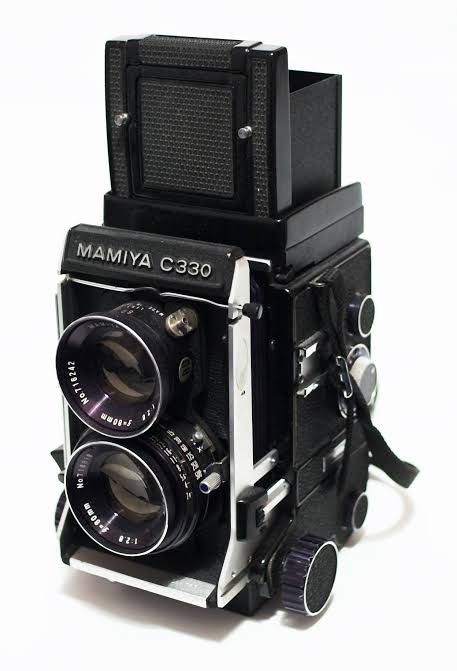
    Of particular interest are Mamiya’s C-series cameras, including the C220 and C330. Unlike most traditional twin-lens reflex designs, these cameras feature interchangeable lens pairs, allowing photographers to select different focal lengths for portraits, landscapes, and other subjects. Both produce 6×6 cm negatives on 120 film and are capable of outstanding photographic results. Their principal disadvantages are their substantial size and weight, along with the additional expense of purchasing interchangeable lenses.

    The Mamiya C330 features interchangeable lens pairs, bellows focusing, and automatic shutter cocking during film advance. Its versatility made it particularly popular among professional portrait and studio photographers.

    As with any older TLR, buyers should carefully examine shutter operation, lens condition, focusing mechanisms, and film advance before purchasing. A properly functioning, less expensive camera can be a much better investment than a prestigious model requiring extensive repairs.

    Where to buy: Browse Mamiya TLRs at KEH and Adorama

    Medium-Format Single-Lens Reflex Cameras

    Mamiya RB67 Professional Series

    The Mamiya RB67 Professional series was widely used by professional portrait, fashion, and studio photographers. Its large 6×7 cm negatives offered excellent detail, while its revolving film back, from which the designation “RB” is derived, allowed photographers to switch between horizontal and vertical compositions without rotating the camera.

    I invested considerably in building my own RB67 Pro-S system and appreciated its versatility. The large negatives allowed generous cropping, including square 6×6 compositions, while interchangeable backs offered other formats, including 6×4.5. The original RB67 Professional was introduced in 1970, followed by the improved Pro-S in 1974 and the Pro-SD in 1990. Mamiya also introduced the RZ67 in 1982, a separate, electronically controlled system that continued alongside the mechanical RB67 cameras.

    Polaroid backs were also available for instant proofs of exposure, lighting, and composition. Fujifilm offered compatible peel-apart films, including FP-100C and FP-3000B. Unfortunately, both manufacturers discontinued these traditional materials, and today’s Polaroid and Instax films are incompatible with the original backs.

    The RB67 delivered outstanding results at a considerably lower cost than the Hasselblad system I had always admired. Like the Hasselblad 500 series, it featured mechanical leaf shutters built into its lenses, allowing flash synchronization at all available shutter speeds. Although exceptionally versatile, its considerable weight and bulk made it better suited to studio photography.
    Mamiya RB67 Pro-S

    Featured improved safety interlocks to help prevent accidental exposures and film-handling errors. Its rugged, fully mechanical construction and extensive selection of interchangeable lenses and accessories made it a favorite among professional studio photographers.

    Where to buy: KEH and Adorama

    Hasselblad Medium-Format Cameras

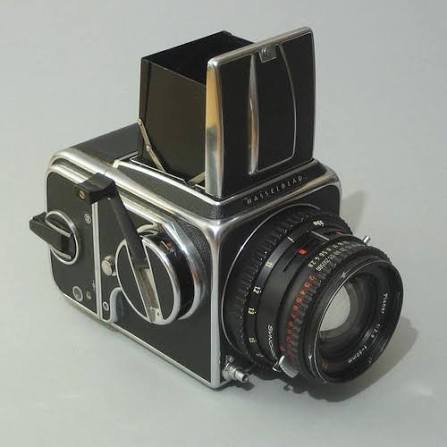
    Hasselblad established an exceptional reputation among professional photographers for its precision engineering, modular construction, and outstanding Carl Zeiss lenses. Classic models such as the 500C, 500C/M, and 501CM produced 6×6 cm negatives and offered interchangeable lenses, viewfinders, focusing screens, and film backs.

    The traditional 500-series cameras use mechanical leaf shutters built into their lenses, allowing flash synchronization at all shutter speeds without requiring batteries. Hasselblad also produced electrically driven models, including the 500EL/M and 553ELX, as well as advanced 200-series cameras with electronically controlled focal-plane shutters.

    Renowned photographers who used Hasselblad equipment include Michael Kenna, celebrated for his atmospheric black-and-white landscapes, and Robert Mapplethorpe, known for his portraits and still-life photographs.

    Although generally more expensive than comparable Mamiya and Bronica equipment, a well-maintained Hasselblad remains an attractive choice for photographers seeking a professional medium-format system. Buyers should carefully examine the condition of the lenses, shutters, film backs, and any electronic components.

    The Hasselblad 500 series offers exceptional image quality, precise manual controls, and remarkable versatility. Its interchangeable components allow photographers to configure the camera for a wide range of photographic applications.
    Where to buy: KEH

    Other Medium-Format SLR Systems Worth Considering

    For photographers seeking alternatives to Hasselblad and the Mamiya RB67, several excellent medium-format SLR systems deserve consideration. The Mamiya 645 and Bronica ETR series produce 6×4.5 cm negatives, while Bronica’s SQ series offers the traditional 6×6 square format. Pentax also produced highly regarded 645 and 6×7 systems, combining excellent optics with handling characteristics familiar to photographers accustomed to 35mm SLRs.

    These cameras offer interchangeable lenses and considerable versatility, often at more approachable prices than comparable Hasselblad equipment. Their condition, availability of accessories, and electronic requirements should be carefully considered when purchasing used examples.

    Where to buy: Browse medium-format at KEH and Adorama

    Mamiya 6 and 7 Rangefinder Cameras

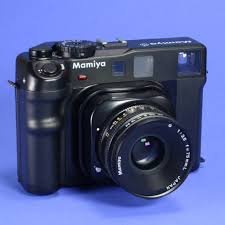
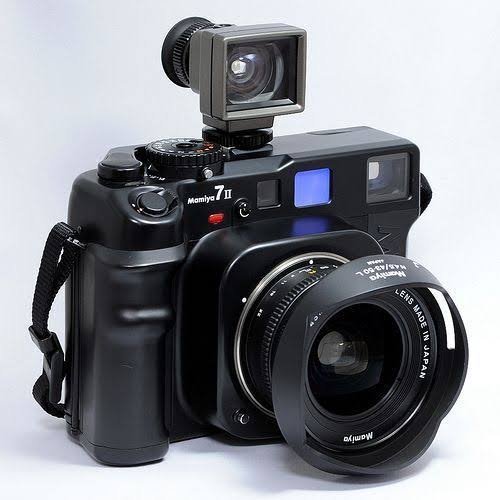
    Mamiya also produced two exceptional medium-format rangefinder systems: the Mamiya 6, producing 6×6 cm negatives, and the Mamiya 7, producing 6×7 cm negatives. Both feature interchangeable lenses and relatively compact designs, making them particularly attractive to landscape, travel, and documentary photographers.

    Unlike traditional SLRs, these cameras use rangefinder focusing rather than viewing directly through the taking lens. Their outstanding lenses, quiet operation, and portability earned them considerable reputations for image quality. Although generally expensive on the used market, both remain highly desirable alternatives to bulkier medium-format systems.

    Introduced in 1989, the modern Mamiya 6 is a compact 6×6 rangefinder featuring interchangeable lenses, a retractable lens mount, and exceptional optical performance.

    Introduced in 1999, the Mamiya 7II is a refined 6×7 medium-format rangefinder featuring interchangeable lenses, exceptionally sharp optics, and a lightweight, portable design.

    Where to buy: KEH

    Final Thoughts

    Choosing a medium-format film camera involves balancing image quality, versatility, portability, and cost. From traditional twin-lens reflex cameras to sophisticated professional systems, each offers a distinctive photographic experience. Although some of these cameras require a considerable investment, many remain capable of producing extraordinary photographs decades after their manufacture.

    For those willing to embrace the deliberate pace of medium-format photography, the rewards can be substantial. Working with larger negatives encourages careful composition, thoughtful exposure, and a greater appreciation of the photographic process. Ultimately, the best camera is not necessarily the most expensive or prestigious, but the one that inspires you to explore your creativity and make photographs that matter.

  • Darkroom Equipment Essentials

    Processing black-and-white film requires only a few essential pieces of equipment. Developing tanks, film reels, accurate thermometers, graduated measuring cylinders, and reliable timers are fundamental tools for achieving consistent results. Whether you’re a student learning the process or an experienced photographer, choosing dependable equipment is an important part of producing quality negatives.

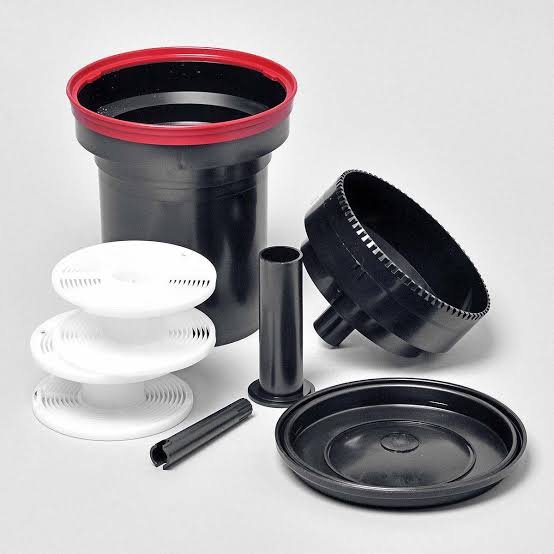
    Developing tanks are essential for processing black-and-white film, allowing chemical solutions to be introduced and drained while keeping the film protected from light. Most tanks use either plastic or stainless-steel reels to hold the film securely and ensure even chemical contact during development. Plastic tanks, such as those manufactured by Paterson, are popular for their ease of use, while stainless-steel systems are valued for their durability and efficient handling. Both designs can produce excellent results, making personal preference, reliability, and ease of loading important considerations when choosing a developing tank.

    Paterson plastic reels feature an easy-loading ratchet mechanism and adjust to accommodate both 35mm and 120 film, but must be completely dry before use. Stainless-steel reels require more practice and are format-specific, but their durability and ease of drying make them ideal for processing multiple rolls.

    Where to buy: B&H Photo

    Explore Additional Developing Tanks

    For photographers interested in comparing other brands, sizes, and price ranges, Amazon offers a selection of developing tanks and reels.

    Browse Developing Tanks on Amazon

    Stainless-Steel Developing Tanks and Reels

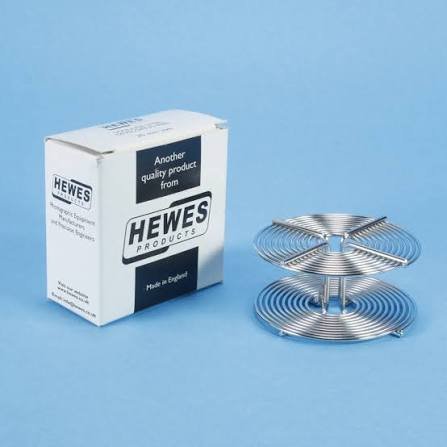
    Hewes 35mm stainless steel reel
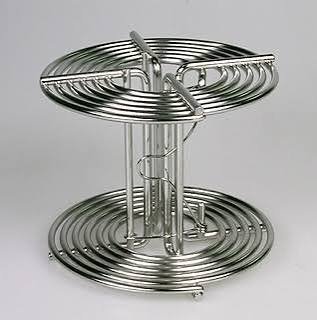
    Hewes 120 stainless steel reel

    For photographers who prefer stainless-steel developing equipment, Hewes reels are a well-established choice, particularly appreciated for their sturdy construction and reliable film-loading design. Unlike adjustable plastic reels, stainless-steel reels are manufactured for specific film formats, requiring separate reels for 35mm and 120 film. Hewes reels can be paired with compatible stainless-steel developing tanks, including suitable Samigon models. Their durability and ease of drying make stainless-steel systems particularly convenient for photographers processing multiple rolls of film in succession.

    Why Reel Quality Matters

    Not all stainless-steel developing reels are manufactured to the same standard. One of the most important considerations is the accuracy and consistency of the wire spiral that supports the film. In my experience, some inexpensive reels have poorly aligned or unevenly spaced coils, making film loading difficult and increasing the risk of adjacent sections overlapping or touching during development. When this occurs, processing chemicals may not reach the affected areas evenly, potentially leaving permanent defects on the negatives. This is particularly distressing when an irreplaceable photograph is involved. For this reason, I consider a well-manufactured reel a worthwhile investment, especially for photographers who regularly process valuable or important work.

    Where to buy 35mm reels:

    B&H Photo

    Glazers

    Where to buy 120 reels:

    B&H Photo

    Glazers

    Stainless-Steel Developing Tanks

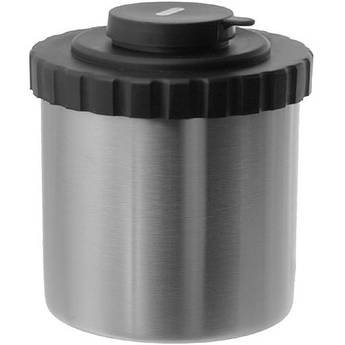
    Stainless-steel developing tanks offer a durable and practical alternative to plastic systems, particularly for photographers who process film frequently. Their construction allows them to be cleaned and dried quickly, making them well suited to repeated use throughout a busy processing session. Tanks are available in different capacities, accommodating anything from a single 35mm reel to several reels at once. Unlike plastic tanks with integrated reel-loading systems, stainless-steel tanks generally use separately purchased reels, so compatibility and tank capacity should be checked carefully before buying. A well-made tank should have a dependable light-tight lid, allow chemicals to be poured and drained efficiently, and provide sufficient space for the intended film format and number of reels.

    Stainless-Steel Developing Tank — Accommodates two 35mm reels or one 120 reel.

    Where to buy:

    B&H Photo

    Glazers

    Amazon

    Darkroom Thermometers and Temperature Control

    Accurate temperature control is essential for consistent black-and-white film development. Most conventional film developers are designed around a standard processing temperature of 68°F (20°C), although recommended temperatures and development times vary according to the film and developer combination. Even relatively small temperature differences can affect development activity and, consequently, the density and contrast of the resulting negatives.

    Stainless-steel dial thermometers are a practical choice for both students and experienced darkroom workers. Their durable construction, easy-to-read dials, and resistance to breakage make them particularly useful in busy processing environments. Unlike fragile glass thermometers, stainless-steel models are well suited to frequent handling and can be used to monitor the temperature of developing solutions and water baths.

    Accuracy, however, is more important than construction alone. A good darkroom thermometer should provide clear readings within the normal photographic processing range and should be checked periodically against a reliable reference thermometer. With proper care, a quality stainless-steel thermometer can provide many years of dependable service.

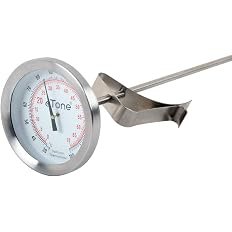
    There are many options available from a variety of retailers. This particular model from eTone has a stem over 8″ long, making it handy for those using deep, 4-reel 35mm or 2-reel 120 developing tanks. Its long stem and relatively modest price make it a practical option worth considering, although accuracy should always be checked against a reliable reference thermometer.

    Stainless steel darkroom thermometer

    Amazon

    Graduated Measuring Cylinders and Chemical Mixing

    Accurate measurement of photographic chemicals is essential for preparing developers, stop baths, and fixing solutions at their proper working concentrations. Graduated cylinders and measuring vessels are available in both glass and plastic, with each offering advantages depending on the photographer’s needs and budget.

    Glass measuring cylinders are often preferred for their chemical resistance, ease of cleaning, and clearly defined graduations. A well-made laboratory-grade glass cylinder can provide years of reliable service when handled carefully. However, glass equipment can be expensive and is vulnerable to breakage, particularly in busy teaching environments.

    Plastic measuring cylinders offer an economical and practical alternative, especially for students and photographers assembling their first darkroom. In my own darkroom, as well as those I worked in during college, plastic measuring vessels were clearly identified with permanent marker to distinguish their intended uses. Assigning separate, clearly labeled vessels to developer, stop bath, and fixer helps reduce the possibility of chemical cross-contamination, which can adversely affect processing results.

    Regardless of the material chosen, measuring equipment should be chemically compatible with the solutions being used, thoroughly cleaned after use, and reserved exclusively for photographic processing. Appropriate protective equipment and careful handling are also important, as some photographic chemicals can cause irritation, staining, or more serious health effects.

    A well-made, clearly graduated glass cylinder is an excellent choice for photographers who appreciate the durability, chemical resistance, and precision of professional laboratory equipment. However, quality plastic measuring cylinders remain a practical and economical alternative, capable of providing years of dependable service when properly maintained.

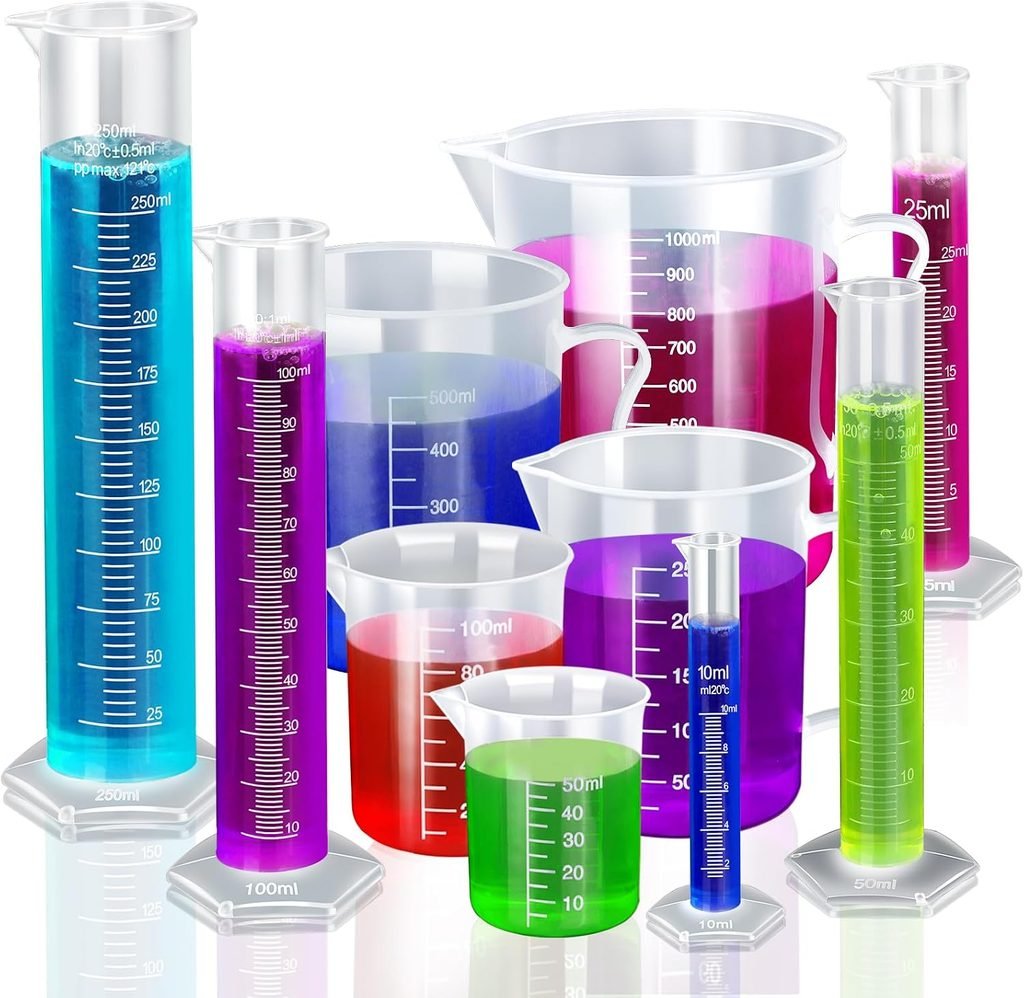
    For photographers assembling their first darkroom, this inexpensive set of plastic graduated cylinders offers a range of measuring capacities worth considering. As with any measuring equipment, the clarity of the graduations, chemical compatibility, and accuracy should be checked before use.

    10-piece plastic Teeniter Graduated Cylinder set

    Where to buy:

    Amazon

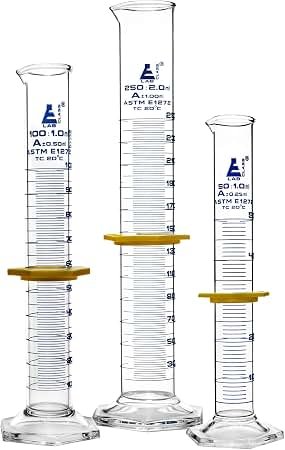
    Glass Graduated Measuring Cylinders: Choosing the Right Size

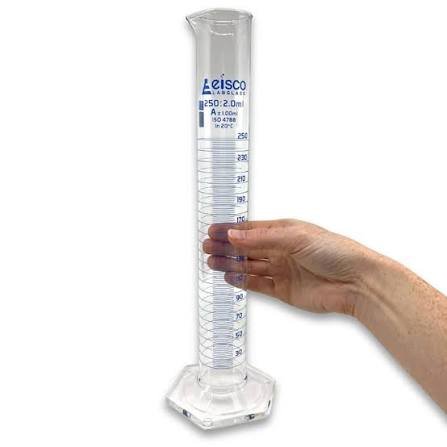
    Eisco Class A Borosilicate Glass Graduated Cylinder

    For photographers who prefer glass measuring equipment, laboratory-grade graduated cylinders offer excellent chemical resistance, clear measurement markings, and ease of cleaning. Borosilicate glass cylinders are particularly well suited to darkroom use, provided they are handled carefully and protected from accidental breakage.

    Although glass cylinders are available in numerous capacities, purchasing a large laboratory assortment is generally unnecessary for photographic processing. Three sizes are particularly worth considering:

    CapacityRecommended UseProduct Link
    100 mLMeasuring smaller quantities of concentrated developers and other photographic solutions.View 100 mL Glass Cylinder
    250 mLMeasuring moderate quantities of chemicals when preparing working solutions.View 250 mL Glass Cylinder
    1,000 mLMeasuring larger volumes of developer, stop bath, fixer, and other processing solutions.View 1,000 mL Glass Cylinder

    Smaller cylinders are particularly useful when accurate measurements of concentrated chemicals are required. Larger cylinders provide greater capacity but generally have wider graduation intervals, making them less suitable for measuring small quantities.

    An Alternative: Glass Measuring Cylinder Sets

    Eisco Class A Borosilicate Glass Graduated Cylinder Set — 50 mL, 100 mL and 250 mL

    For photographers establishing a new darkroom, purchasing a set of borosilicate glass measuring cylinders may offer a convenient and economical alternative to buying individual pieces. Before selecting a set, consider whether the included capacities suit your processing requirements, as additional sizes are not necessarily useful for every photographer.

    Where to buy:

    Amazon

    Darkroom Timers: Traditional and Modern Options

    Accurate timing is essential for consistent black-and-white film processing. Whether measuring development, stop bath, or fixing times, a reliable timer helps photographers maintain control over their procedures and achieve repeatable results.

    For photographers just beginning to develop their own film, a smartphone equipped with a stopwatch or countdown timer may be perfectly adequate. However, dedicated darkroom timers remain a worthwhile investment for those who process film regularly or prefer equipment designed specifically for the task. Traditional mechanical models offer simplicity and durability, while modern electronic timers provide additional features, often at surprisingly reasonable prices. Whatever method is chosen, timing devices should be protected from chemical splashes and handled with clean, dry hands.

    Gralab Model 300: Traditional Darkroom Timer

    Where to buy:

    B&H Photo

    Paterson PTP800 Triple Darkroom Timer

    For photographers seeking a more compact and versatile dedicated timer, the Paterson PTP800 offers several useful features. Its three independently controlled timing functions can operate separately or simultaneously, with distinct audible signals to indicate when each interval has elapsed. The unit also provides countdown, count-up, and stopwatch functions, along with a large LCD display and magnetic mounting.

    These features make it a practical option for photographers managing several timed processes, particularly those working regularly in the darkroom. While a smartphone remains perfectly adequate for many routine tasks, the Paterson offers the convenience of a purpose-built timing instrument without the bulk of traditional mechanical models.

    Where to buy:

    B&H Photo

    Amazon