Silver Halide Heritage

The Art of Black & White Photography

Category: Black & White Films

  • Remembering Kodak Verichrome Pan: Exploring Today’s Alternatives

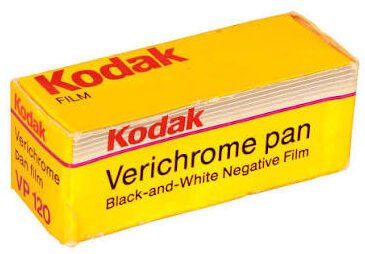
    Kodak Verichrome Pan holds a special place in my memories of traditional black-and-white photography. Although manufactured in several formats, including 120, 620, and sheet film, it was never offered in 35mm. I particularly enjoyed using Verichrome Pan in 120 roll-film format, where its smooth tonal transitions, pleasing greyscale, and generous exposure latitude made it one of my favourite films for portraiture and landscape photography.

    When enlarged to 8×10 or 11×14 inches, Verichrome Pan produced prints with a tonal richness I particularly appreciated. Even larger enlargements were possible, especially when using my Mamiya RB67 Pro S medium-format camera, whose generous 6×7 cm negatives provided ample detail for substantial prints while preserving the smooth greyscale that made the film so appealing. Its traditional grain structure and forgiving exposure characteristics made it dependable across a variety of photographic situations. Even when exposure was less than ideal, I often found that the negatives remained quite usable.

    I also appreciated its versatility in development. My choice of developer depended upon the subject and the qualities I hoped to achieve. For portraiture, I frequently preferred PMK, a staining developer containing pyrogallol. In my experience, this combination produced exceptionally smooth tonal transitions and pleasing skin tones. For landscapes and more general photography, Kodak D-76 diluted 1:1 was often my choice, yielding fine grain, excellent apparent sharpness, and good tonal separation.

    Verichrome Pan was discontinued in 2002, leaving photographers who appreciated its distinctive characteristics searching for suitable alternatives. Although no currently manufactured film can reproduce its emulsion exactly, several available black-and-white films possess qualities that make them worthy of consideration.

    Two particularly interesting possibilities are Ilford FP4 Plus 125 and Bergger Pancro 400, both available in 120 roll-film format.

    Ilford FP4 Plus 125: A Natural Starting Point

    Among today’s traditional black-and-white films, Ilford FP4 Plus is one of the most logical starting points for photographers seeking qualities reminiscent of Verichrome Pan.

    Like Verichrome Pan, FP4 Plus has a nominal sensitivity of ISO 125. It is a conventional-grain panchromatic film known for fine grain, excellent sharpness, moderate contrast, and generous exposure latitude.

    These characteristics make it particularly suitable for portraiture, landscapes, architecture, and general photography where careful tonal rendition is important.

    For photographers who appreciated Verichrome Pan’s forgiving nature, FP4 Plus offers a similar practical advantage. Its exposure latitude provides considerable flexibility, while appropriate development can help control highlight density and overall negative contrast.

    FP4 Plus can be developed in a wide variety of conventional developers, including Ilford ID-11 and Kodak D-76. The choice of developer, dilution, agitation, and development time can influence the final negative, making it a versatile film for photographers who enjoy working toward a particular tonal interpretation.

    In 120 format, its fine grain and sharpness make it especially attractive for photographers intending to produce traditional enlargements.

    For someone who remembers Verichrome Pan and wishes to explore a contemporary film with comparable speed and a similarly versatile character, FP4 Plus is an excellent candidate. This recommendation is based on the film’s published characteristics rather than a claim that the two emulsions produce identical results.

    Related information and photographic examples:

    Ilford FP4 Plus: Manufacturer information and specifications

    Bergger Pancro 400: Traditional Tonality with Greater Speed

    Another particularly interesting possibility is Bergger Pancro 400, a black-and-white panchromatic film available in 120 format.

    Unlike Verichrome Pan and FP4 Plus, which are rated at ISO 125, Bergger Pancro has a nominal sensitivity of ISO 400. This provides approximately one and two-thirds stops of additional speed, a significant advantage when photographing in reduced light.

    For photographers working with available-light portraiture, interiors, overcast conditions, or other situations where illumination is limited, that additional sensitivity can be extremely useful.

    A faster film may permit a shutter speed sufficient to reduce camera movement or subject motion without requiring the photographer to open the lens aperture as far. This can be particularly valuable when using medium-format cameras handheld.

    What makes Bergger Pancro 400 especially interesting, however, is that its appeal extends beyond speed alone.

    The film employs a dual-emulsion design and is described by Bergger as offering extended greyscale, wide exposure latitude, and manageable contrast. Its grain and tonal characteristics depend, as with other films, upon exposure and development.

    These qualities make Pancro 400 worth investigating for photographers who appreciated Verichrome Pan’s smooth tonal transitions and flexibility in processing.

    Naturally, an ISO 400 film will not necessarily reproduce the grain characteristics of an ISO 125 emulsion. Nevertheless, the larger negative area of 120 film can help make grain less intrusive in moderate-sized enlargements.

    For someone seeking a traditional-looking black-and-white negative while needing greater flexibility in available light, Bergger Pancro 400 may prove an excellent alternative.

    Its tonal characteristics and response to different developers also make it an intriguing choice for photographers who enjoy experimenting with exposure and processing techniques.

    Related information and photographic examples:

    Bergger Pancro 400: Manufacturer and product information

    Bergger Pancro 400 Review: Beyond the Aperture

    The independent review provides examples of Pancro 400 in medium-format photography. As with any photographic comparison, differences in exposure, development, scanning, and printing should be considered when evaluating the results.

    Choosing Between FP4 Plus and Pancro 400

    For photographers seeking a contemporary alternative to Verichrome Pan, the choice between these two films depends largely upon the intended subject and working conditions.

    Ilford FP4 Plus 125 would be my first recommendation for photographers who wish to remain close to Verichrome Pan’s original speed and value fine grain, traditional tonal rendition, and flexibility in development. It is particularly well suited to landscapes, portraits under controlled lighting, and photography where shutter speed is less critical.

    Bergger Pancro 400 deserves particular consideration when additional film speed is needed. Its ISO 400 sensitivity makes it better suited to available-light portraiture, dim interiors, and other low-light situations where the slower FP4 Plus might require impractically long exposures. Its broad tonal range and traditional grain character make it an appealing choice beyond its speed advantage.

    Neither film should be regarded as an exact reproduction of Kodak Verichrome Pan. Each possesses its own emulsion characteristics, and the resulting negative will depend upon exposure, development, and the photographer’s working methods.

    Final Thoughts

    For those of us who remember Verichrome Pan, its disappearance represented more than the loss of another film from a manufacturer’s catalogue. It meant losing a familiar photographic material whose particular characteristics we had learned to understand and appreciate.

    Fortunately, traditional black-and-white photography still offers worthwhile alternatives.

    Ilford FP4 Plus provides a logical starting point for photographers seeking the fine grain, moderate speed, and generous exposure latitude associated with Verichrome Pan. Bergger Pancro 400 offers another compelling possibility, especially when greater sensitivity is needed without abandoning the tonal qualities that make conventional black-and-white film so appealing.

    Ultimately, the objective should not be to reproduce Verichrome Pan perfectly, but to discover which available film and developer combinations can provide the qualities we valued in it.

    That process of experimentation, observation, and refinement has always been one of the great pleasures of traditional photography.
  • Exploring Traditional Black-and-White Films Available Today

    Traditional black-and-white films each possess distinctive characteristics, from grain structure and contrast to tonal range and sensitivity to light. The choice of film, together with exposure and development techniques, plays an important role in determining the character of the finished photograph. Drawing upon decades of practical darkroom experience, we’ll explore the qualities of several films available today, helping photographers choose the emulsions best suited to their creative needs.

    Kodak Ektapan 100

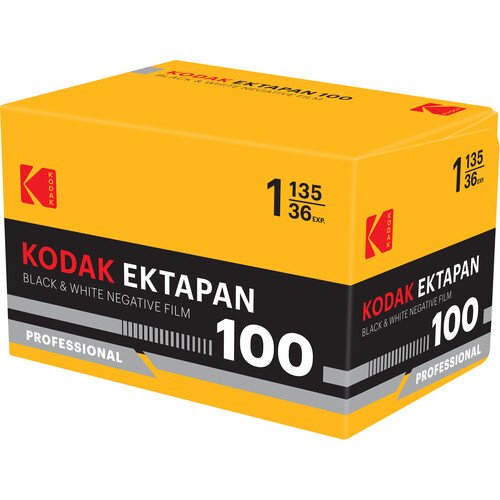
    Kodak Ektapan 100 is a black-and-white negative film using Kodak’s T-Grain emulsion technology. Kodak emphasizes its very fine grain, high sharpness, and ability to record fine detail for things like portraits, landscapes, architecture, and larger prints. It’s available in 35mm, 120, and 4×5 formats. Although I’ve used Kodak T-Max 100 extensively since the early 1990’s, I haven’t tested film sold under the Ektapan name yet, so the specs above come from Kodak’s published information rather than my own results.

    Click the link below to read photographer John Sexton’s article on T-Max films:

    “A Few Ideas on Using Kodak T-Max Films Successfully” (1987).

    Where to buy:

    B&H Photo

    Amazon

    Kodak Ektapan 400

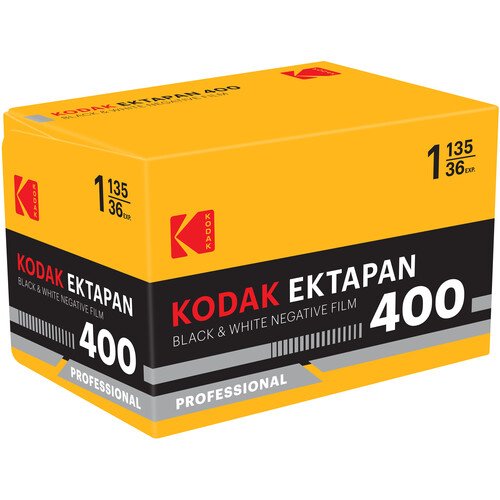
    Kodak Ektapan 400 combines ISO 400 sensitivity with Kodak’s T-Grain emulsion technology for fine grain and high sharpness. Its two-stop speed advantage over Ektapan 100 allows faster shutter speeds or smaller apertures in the same light, making it useful for handheld photography, moving subjects, and lower-light situations. Available in 35mm, 120, and 4×5 formats, it balances fine detail with the flexibility of a faster film. For historical perspective, John Sexton described using T-Max 100 as his primary film and choosing T-Max 400 when he needed additional speed—a practical distinction worth considering when selecting between film speeds.

    Where to buy:

    B&H Photo

    Amazon

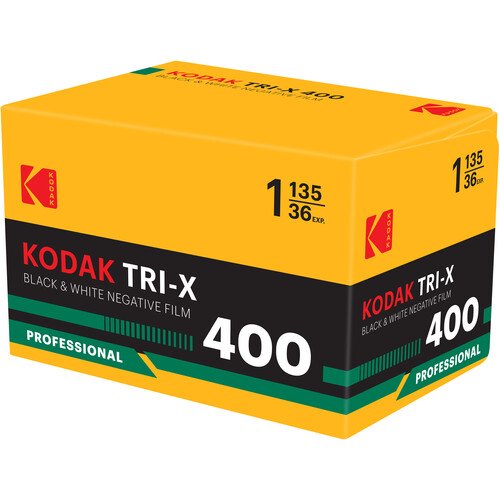
    Kodak Tri-X 400

    Kodak Tri-X 400 is a classic ISO 400 panchromatic black-and-white film, valued for its distinctive grain, sharpness, and generous exposure latitude. It remains a popular choice for portraiture, street photography, and documentary work.

    In my own photography, I frequently exposed Tri-X at an exposure index of 200, providing additional exposure and reducing development to achieve the tonal range I preferred. This approach helped preserve shadow detail while controlling highlights and overall contrast.

    Other accomplished photographers have developed their own approaches to Tri-X. John Sexton and Michael Kenna offer particularly interesting perspectives on how exposure, development, and printing techniques can shape the character of this remarkably versatile film.

    Further reading:

    https://www.johnsexton.com/newsletter11-2024.html

    https://www.michaelkenna.net/ivwork.php

    Where to buy:

    B&H Photo

    Amazon

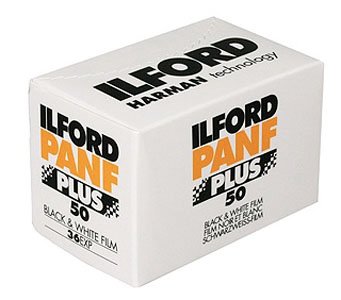
    Ilford Pan F Plus

    Ilford Pan F Plus is an ISO 50 black-and-white film that Ilford describes as a high-contrast offering with exceptionally fine grain, sharpness, and detail. In my own work, however, I used exposure and development adjustments with various fine-grain developers to moderate that contrast and achieve a longer tonal scale. I particularly valued the smooth skin tones it produced in portraiture, along with the fine detail and gentle tonal transitions I achieved in landscapes. Its exceptionally fine grain also allowed me to make substantial enlargements while retaining a smooth, detailed image. Although its slower speed requires sufficient light or tripod support, I found Pan F Plus rewarding for photographers willing to tailor exposure and development to the results they want.

    Further reading:

    https://www.ilfordphoto.com/ilford-panf-plus-montana-snow

    https://www.gregoryowain.co.uk/blog/film-review-ilford-pan-f-plus-35mm

    Where to buy:

    B&H Photo

    Amazon

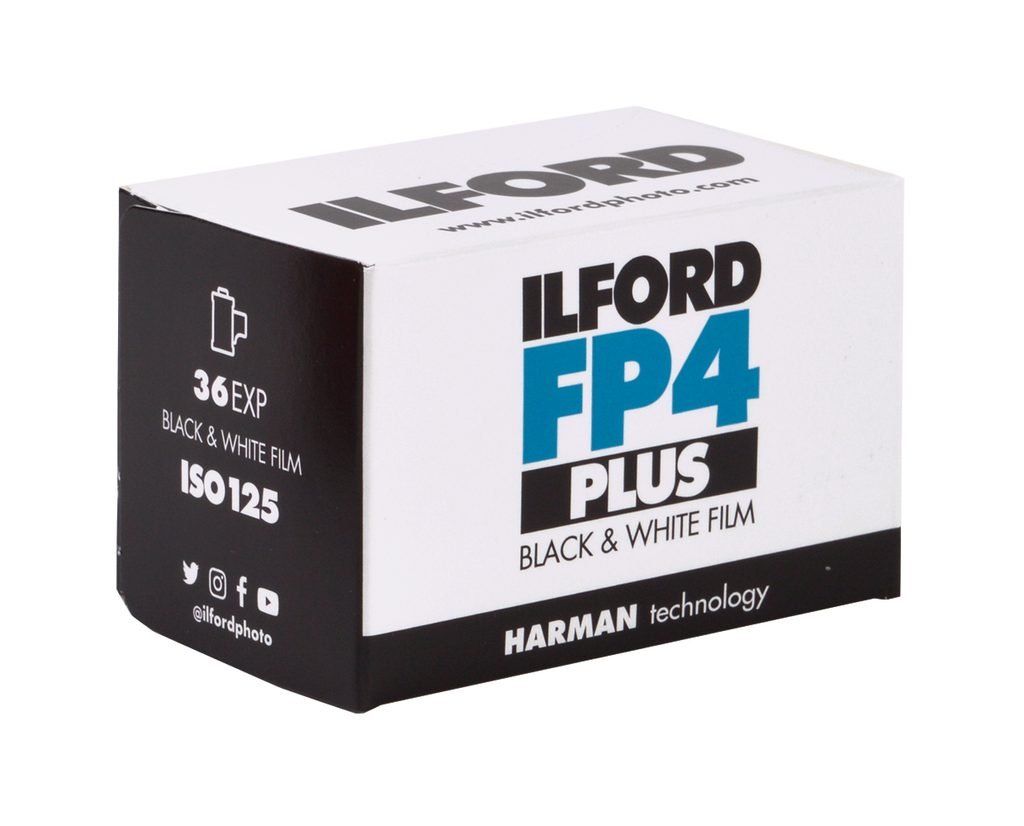
    Ilford FP4 Plus

    Ilford FP4 Plus is an ISO 125 all-purpose black-and-white film offering fine grain, excellent sharpness, and wide exposure latitude. I used it alongside Kodak Plus-X and turned to it for the kinds of photography I had previously undertaken with Verichrome Pan after that film was discontinued. To my eye, FP4 Plus had more in common with Plus-X in its overall character, but its speed and versatility made it a practical choice for work that Verichrome Pan had once served. I regard it as a dependable traditional film in this speed range, with room to tailor exposure and development to the subject and the intended print.

    Further reading:

    https://www.richardpickup.com/blog/2016/10/9/pebble-project-fp4

    Where to buy:

    B&H Photo

    Amazon multi-pack option

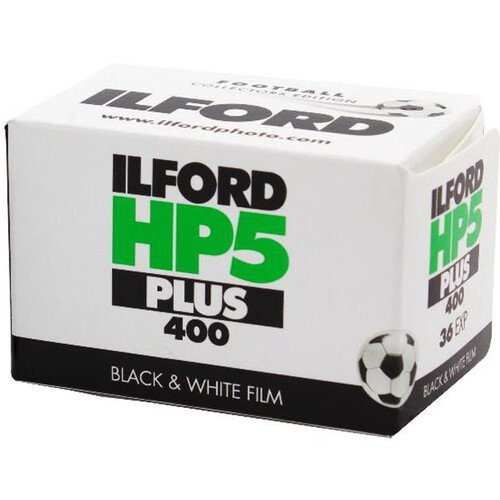
    Ilford HP5 Plus

    Ilford HP5 Plus is an ISO 400 panchromatic black-and-white film offering fine grain, excellent sharpness, medium contrast, and wide exposure latitude. Like Kodak Tri-X 400, it is a versatile traditional film suited to portraiture, street photography, documentary work, and available-light shooting. Both respond well to push processing when faster shutter speeds are needed, with changes in grain, contrast, and shadow detail. HP5 Plus offers considerable freedom to shape its tonal character through exposure, developer choice, and development time. Although photographers often describe HP5 Plus as gentler in contrast than Tri-X, neither film has a single fixed look: processing and printing strongly influence the result, making personal testing more useful than declaring one superior.

    Where to buy:

    B&H Photo offers single rolls and multi-packs

    Amazon offers multi-packs

    Further reading:

    https://bluemooncameracodex.com/film-fridays/ffilfordhp5

    For a photographic comparison of Ilford HP5 Plus and Kodak Tri-X 400, visit Hai Hoang Tran’s illustrated article, which explores the visual characteristics of these two classic black-and-white films.

    https://www.haihoangtran.com/blog/2018/10/15/ilford-hp5-pus-vs-kodak-tri-x-400

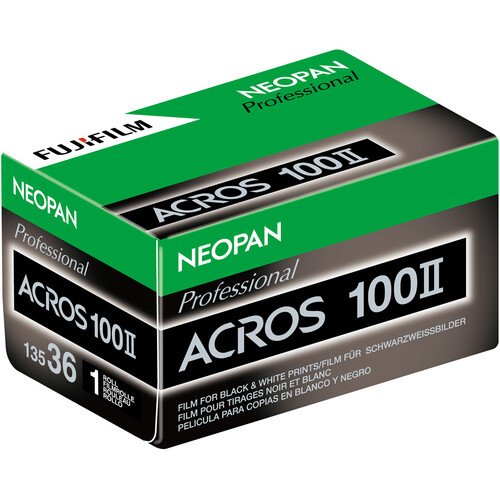
    Fujifilm Neopan 100 Acros II

    Fujifilm Neopan 100 Acros II is an ISO 100 black-and-white film known for its exceptionally fine grain, high sharpness, and excellent tonal reproduction.

    I worked with the original Neopan Acros 100 approximately thirty years ago and found it comparable in many respects to Kodak T-Max and Ilford Delta films. However, I found its contrast somewhat higher than I preferred. Developing it in Kodak D-76 diluted 1:1 helped me achieve more balanced negatives with pleasing midtones.

    Although I have not yet tested Acros II, Fujifilm describes the newer emulsion as offering improved tonal gradation, particularly in the highlights. My observations concerning exposure and development are based on the original Acros rather than its successor.

    Further Reading:

    EMULSIVE offers an illustrated comparison of the original Neopan Acros 100 and Acros II, examining differences in contrast, shadow detail, and tonal reproduction.

    Where to buy:

    Fujifilm Neopan Acros II 100

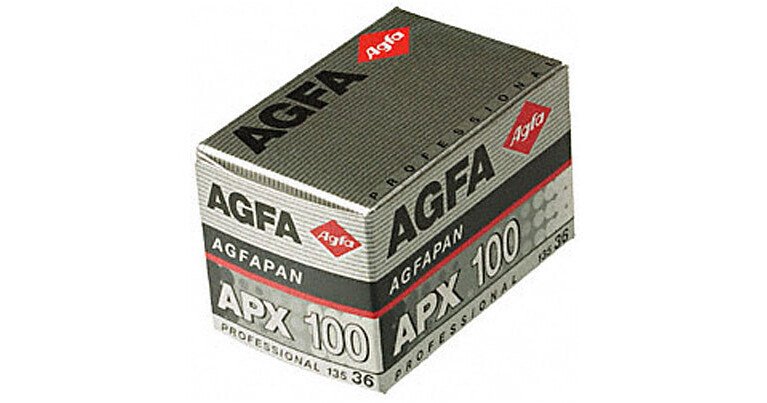
    Agfa APX 100

    The original Agfa APX 100 was one of my favorite traditional black-and-white films, with a distinctive character that I found particularly appealing.

    In my experience, APX 100 exhibited a distinctly silver-rich character, producing negatives with excellent tonal depth, pleasing grain, and forgiving exposure latitude. Unlike some of the newer, exceptionally fine-grained emulsions, APX 100 retained what I considered a more traditional photographic appearance, reminiscent of the great photojournalistic images of the 1950s and 1960s.

    Its tonal characteristics seemed particularly well suited to documentary photography, where atmosphere and emotional impact can be just as important as technical perfection. I can easily imagine its rendering being used to document the construction of the Berlin Wall in 1961, capturing the starkness and gravity of that historical moment. Its traditional grain structure and tonal depth could lend themselves beautifully to portraying the bleak, utilitarian architecture associated with parts of Cold War East Berlin.

    Although the original German-made Agfa APX 100 emulsion is no longer manufactured, photographers can still purchase film under the AgfaPhoto APX 100 name. However, the modern film uses a different formulation and should not be considered identical to the original. Its grain structure, contrast, and tonal characteristics deserve to be evaluated independently. My observations above concern the original Agfa emulsion, not its contemporary namesake.

    Further Reading:

    For readers interested in seeing photographs produced with the original Agfa APX 100 emulsion, photographer Jim Grey offers an illustrated account of his experience using this classic black-and-white film. His photographs provide an opportunity to appreciate the tonal qualities and traditional photographic character that made the original APX 100 such a memorable film.

    Where to buy:

    The original Agfa APX 100 emulsion is discontinued. The following retailer offers the modern AgfaPhoto APX 100, a different film sold under the APX name.

    KEH

    Kentmere, affordable traditional black and white films

    Kentmere black-and-white films offer photographers an affordable introduction to traditional film photography without sacrificing dependable performance. Manufactured by Harman Technology, the company behind Ilford photographic products, Kentmere films provide a practical alternative to more expensive emulsions.

    The Kentmere range is particularly appealing to students, beginners, and experienced photographers who shoot frequently and want to keep their film costs manageable. These films offer good sharpness, pleasing tonal reproduction, and sufficient exposure latitude for a variety of photographic applications.

    Although they may lack some of the refined characteristics of premium emulsions, Kentmere films are capable of producing excellent negatives when properly exposed and developed. Their affordability also encourages experimentation with exposure, development, and printing techniques, an important part of learning traditional black-and-white photography.

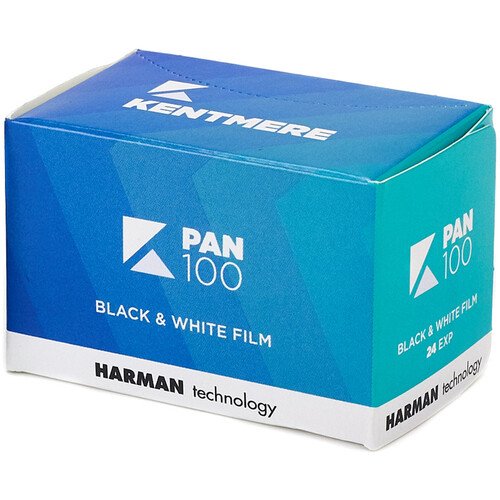
    Kentmere Pan 100

    Kentmere Pan 100 is a traditional, fine-grained black-and-white film with a nominal sensitivity of ISO 100. Particularly well suited to photography in good lighting conditions, it offers pleasing tonal gradation and a relatively fine grain structure, making it an attractive choice for landscapes, architecture, portraiture, and general photography. Its economical price also makes it appealing to students learning the fundamentals of exposure, film development, and darkroom printing. For photographers who appreciate the traditional appearance of silver-based black-and-white photography, Kentmere Pan 100 offers an accessible starting point.

    Explore Obsidian Urbox for a detailed look at Kentmere Pan 100 in action.

    Where to buy:

    B&H Photo

    Amazon two-pack

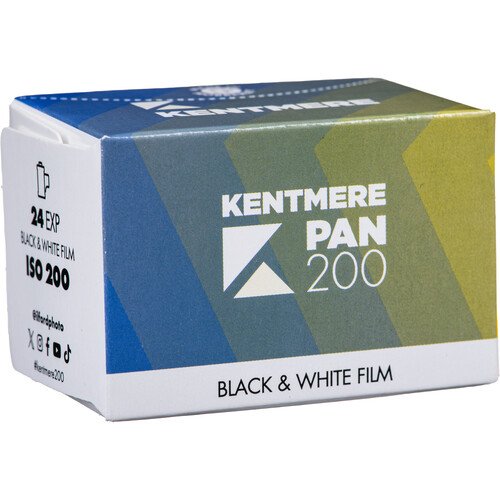
    Kentmere Pan 200

    Kentmere Pan 200, introduced in 2025, offers an additional stop of sensitivity when compared with Kentmere Pan 100, while retaining relatively fine grain and a distinctive tonal character. Early reviews suggest that its rendering makes it particularly interesting for street photography, architecture, and subjects where greater tonal separation is desirable. For photographers who want greater flexibility than ISO 100 provides, but who don’t require the additional speed of Kentmere Pan 400, Pan 200 may represent a balanced and economical choice.

    For readers interested in examining photographs produced with Kentmere Pan 200, PetaPixel offers an illustrated review with sample photographs and firsthand observations. The article discusses the film’s contrast, grain structure, and versatility, providing a useful opportunity to explore its photographic characteristics.

    Kentmere Pan 200 Review | PetaPixel

    Where to buy:

    B&H Photo

    Kentmere Pan 400

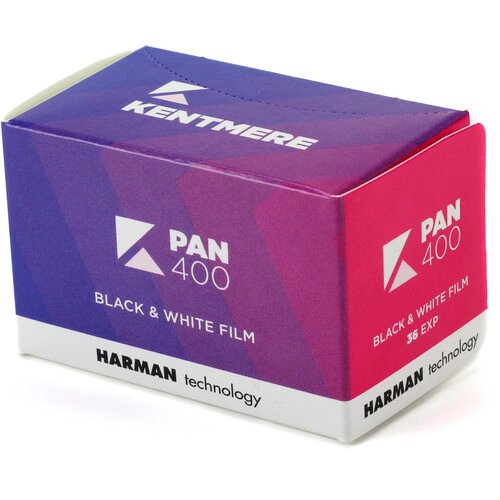
    Kentmere Pan 400 is a traditional black-and-white film offering an ISO sensitivity of 400, making it particularly useful for handheld photography, street photography, documentary work, and situations where lighting conditions may be less than ideal. Its higher sensitivity allows photographers to use faster shutter speeds or smaller apertures than would be practical with slower films. Although its grain is generally more noticeable than that of Kentmere Pan 100 or 200, this can contribute to the distinctive character associated with traditional black-and-white photography. For students and enthusiasts seeking an economical, versatile film suitable for a wide variety of subjects and lighting conditions, Kentmere Pan 400 represents an appealing option.

    For readers interested in exploring the photographic capabilities of Kentmere Pan 400, photographer Matt Osborne offers an illustrated review featuring examples of his work and observations drawn from first-hand experience. His article examines the film’s grain structure, tonal qualities, and performance under various photographic conditions, providing readers with a useful perspective on its versatility and suitability for traditional black and white photography.

    Where to buy:

    B&H Photo

    Final Thoughts

    The films discussed here represent only a portion of the choices available to today’s black-and-white photographer. Each possesses characteristics that may appeal to different photographic styles, subjects, and personal preferences. Yet selecting an emulsion is only the beginning. The photographer’s decisions regarding exposure, developer selection, dilution, and processing technique can profoundly influence the character of the resulting negative. There is no single combination that will satisfy every photographer or every photographic situation. Much of the pleasure of traditional photography lies in experimentation, developing an understanding of one’s materials, and discovering the combinations that best express one’s photographic vision. In our next discussion, we will explore black-and-white film developers and the important role they play in transforming an exposed film into a negative worthy of the darkroom.